Most schools have intercoms, but few are designed with a "safety-first" lens. When an incident occurs, traditional communication often turns chaotic—audio is muffled, messages lag, and response protocols break down.
A modern school intercom system must be more than a paging tool; it must be a dependable lifeline during time-sensitive emergencies. This guide from ZYCOO explores how IP-based voice solutions bridge the gap between legacy paging and advanced campus safety communication, helping build more resilient, responsive school environments.
Why School Intercom Systems Matter for Campus Safety
The Communication Foundation Behind Campus Safety
Campus safety depends on people receiving the right message at the right moment. Procedures and policies only work if communication supports them. In many school incidents, the first failure is not equipment or response time but confusion. Someone hears partial information. Someone else hears nothing at all.
A school intercom system provides a shared communication backbone across classrooms, hallways, offices, and outdoor areas. When designed properly, it allows administrators and safety teams to speak with clarity and intent. That clarity reduces hesitation and helps staff act following the instructions with confidence.
Shared Demands of Daily Operation and Emergencies
Intercom systems are used every day. Routine announcements, schedule adjustments, and staff coordination all rely on the same speakers and control points as emergency messages. This daily use builds familiarity. When pressure is high, people already know how the system behaves.
Schools that separate normal communication from emergency communication often discover that emergency-only systems feel unfamiliar when they are finally needed. A well-designed school intercom system avoids that divide by supporting both without changing how staff interact with it.
What School Intercom Systems Actually Do
Daily Communication and Campus Operations
In most schools, intercom systems are used far more often for routine coordination than for emergencies. Morning announcements, class transitions, schedule changes, and staff communication all rely on the same infrastructure. Because of this, the system becomes part of the school's daily rhythm rather than a tool that only appears during incidents.
Administrators use the intercom to reach specific buildings or groups of classrooms without interrupting the entire campus. Teachers can contact the office when support is needed, whether for a student issue, a medical concern, or simple coordination. Offices, in turn, can reach classrooms directly without sending staff across the campus.
This everyday use is important. It exposes audio issues early. It shows whether zoning matches how the campus is actually used. And it ensures staff are comfortable with the system long before it needs to support time-critical communication.
Safety Response and Emergency Coordination
When conditions change, the same intercom system shifts from routine messaging to coordinated response. In safety situations, schools need a way to deliver clear instructions quickly, often to very specific areas. This is often achieved through prerecorded emergency alerts that can be triggered instantly, ensuring that even under high stress, the tone and instructions remain calm, clear, and consistent. A targeted message to one building or zone can be more effective than a campus-wide alert, especially when not all areas are affected.
Intercom systems also support faster decision-making by enabling controlled two-way communication. Staff in classrooms or corridors can report what they see. Administrators can adjust instructions based on real conditions. This feedback loop helps reduce confusion and unnecessary escalation.
In more advanced setups, intercom systems also interact with other campus systems during emergencies. Voice instructions can align with access control actions or safety procedures, helping schools respond in a coordinated way.
From Traditional Intercom to Network-Based School Communication
Many schools are still using intercom systems that were built for a much simpler campus setup. One control point. Fixed wiring. Very limited zoning. As long as the daily routine stays the same, these systems seem fine. Announcements go out. Bells ring. Nothing feels urgent.
Problems start when the campus changes.
Buildings get added. Schedules stop being uniform. Safety procedures become more detailed and more time-sensitive. At that point, traditional intercom systems begin to show their limits. Adjustments take effort. Temporary fixes turn into permanent workarounds. Over time, announcements, bells, phones, and safety alerts end up running as separate layers that don't always line up.
Network-based school intercom systems approach this differently. They don't try to make old layouts more complex. Instead, they follow how the campus actually operates today. Messages are no longer locked to a single physical path. Zones reflect real spaces, not wiring diagrams. Control shifts closer to where decisions are made.
This change becomes especially clear during incidents. When a fire alarm goes off or access control states change, people still need clear direction. Alarms tell you something is wrong. Intercom systems tell you what to do next. In real situations, the intercom becomes the voice that turns system signals into coordinated human action.
Fundamental Structure of a Modern School Intercom System
Centralized Control and Operational Visibility
Every school intercom system needs a clear control point, whether in an administrative office, a security desk, or a designated operations area. With the ZYCOO IP Audio Center, operators gain immediate visibility into all zones across the campus, allowing for simple and error-free message delivery even during high-pressure situations.
Underlying Network and Audio Infrastructure
Modern school intercom systems often rely on IP networks for audio transport and control. While the network itself does not need to be complex, it must be stable. Voice traffic should behave predictably even when other systems are active. Reliability matters more than raw performance.
Audio and Intercom Endpoints Across Campus
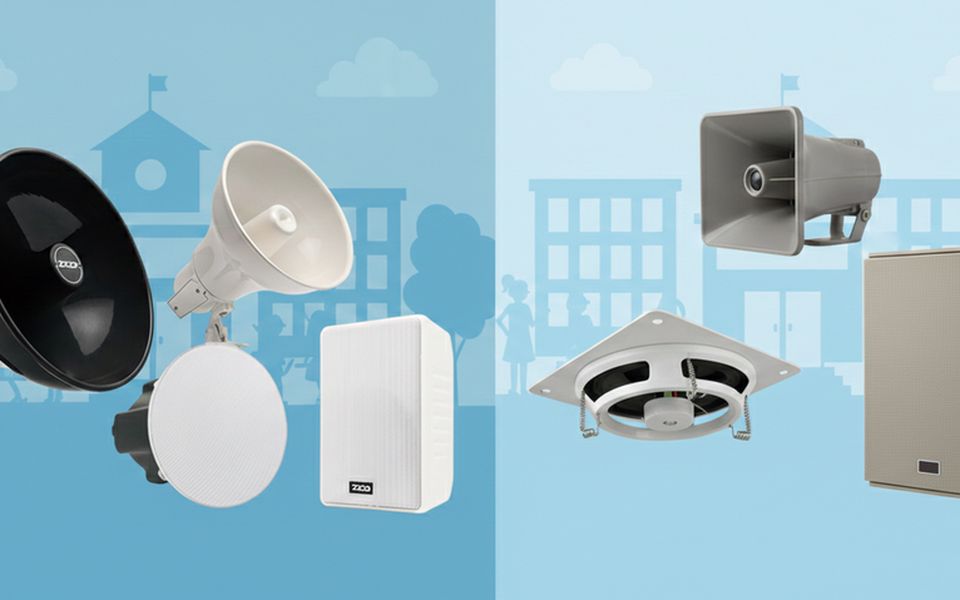
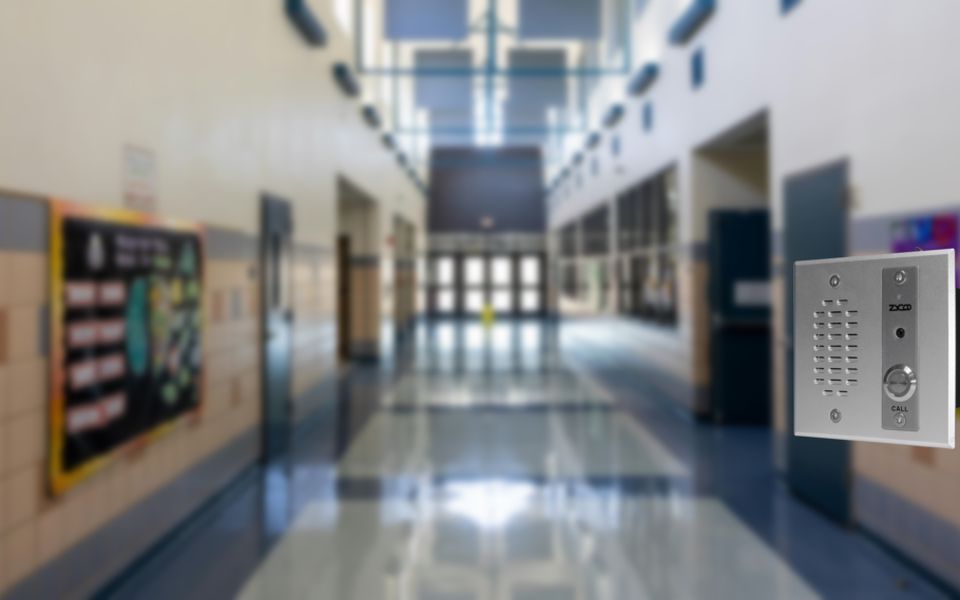
The endpoints are at the edges of the system. Classroom speakers, corridor intercoms, office units, and outdoor speakers define who hears messages and where communication is possible. With Intercoms (ZYCOO's VI-V05) placed in classrooms and hallways, teachers and staff can provide immediate feedback to the central office.
During an incident, an operator can trigger a call to a specific room to assess the situation, or a teacher can report a local emergency with a single tap. This real-time two-way talkback feature ensures that the response team is acting on live information, effectively turning every classroom into a sensory point for the entire safety network.
Planning Considerations for Campus Intercom System Design
Coverage, Zoning, and Control Logic
Effective design starts with understanding how the campus is used. Student movement patterns, shared spaces, and staff workflows should inform zoning decisions. Overly broad zones reduce control. Overly narrow zones increase complexity. Balance matters.
Reliability During Emergency Situations
During emergencies, systems must work under imperfect conditions. Power fluctuations, network congestion, and human stress are real factors. Designs should prioritize predictable behavior and simple operation. A system that works consistently every day is more likely to work when pressure is high.
Scalability and Long-term Maintenance
Schools change over time. Buildings are added. Functions move. Safety requirements evolve. Intercom systems for schools should support gradual expansion and straightforward maintenance without forcing complete replacement every few years.
When Schools Should Reevaluate Their Intercom System
Schools often revisit their communication systems after an incident or inspection. But there are earlier signs that reevaluation may be necessary.
If daily announcements are inconsistent, if staff rely heavily on phones for coordination, or if multiple systems must be operated in parallel, the intercom system may no longer match operational needs.
Changes in safety policies can also trigger review. New procedures often assume faster, more controlled communication than legacy systems can provide.
While reevaluation doesn't always require a full rip-and-replace, integrating a SIP-based gateway is often the most cost-effective first step toward a modern network. In many cases, schools integrate existing infrastructure into a more centralized, network-based approach for alignment.
Closing Thoughts
A school intercom system is rarely the most visible part of a campus safety strategy. But it is often the most used. When communication works quietly in the background, it supports both learning and safety without drawing attention to itself.
For schools, system designers, and integrators, the real question is not whether an intercom system exists, but whether it reflects how the campus actually operates today. Understanding that gap is usually the first step toward better decisions.
If you are evaluating communication design for an education environment, exploring how ZYCOO’s IP-based intercom and audio systems fit into your existing infrastructure is a practical place to start. Our team helps system designers create scalable, safety-focused solutions that meet the unique demands of modern campuses.