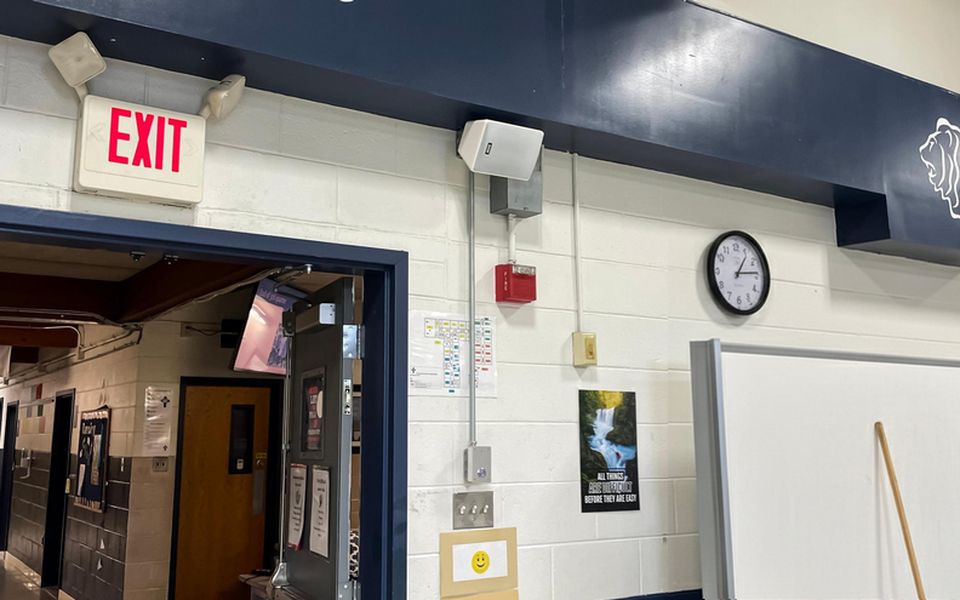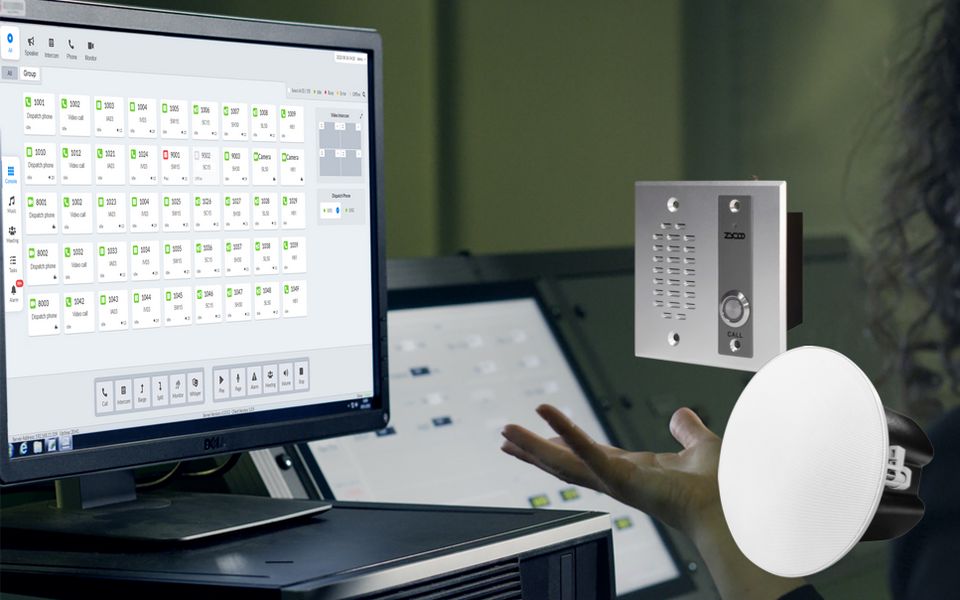
Clear voice communication is necessary to improve collaboration and efficiency. Factories, schools, hospitals, offices, and public buildings all need paging or intercom systems for voice communication to keep people informed and aligned.
Paging and intercom are two audio communication methods often thought to be interchangeable in dealing with voice communication. However, they behave very differently and are used for different communication purposes.
This article takes a closer look at the differences between the paging and intercom systems to help clarify which option, or combination, makes sense for your specific communication requirements.
What Is A Paging System?
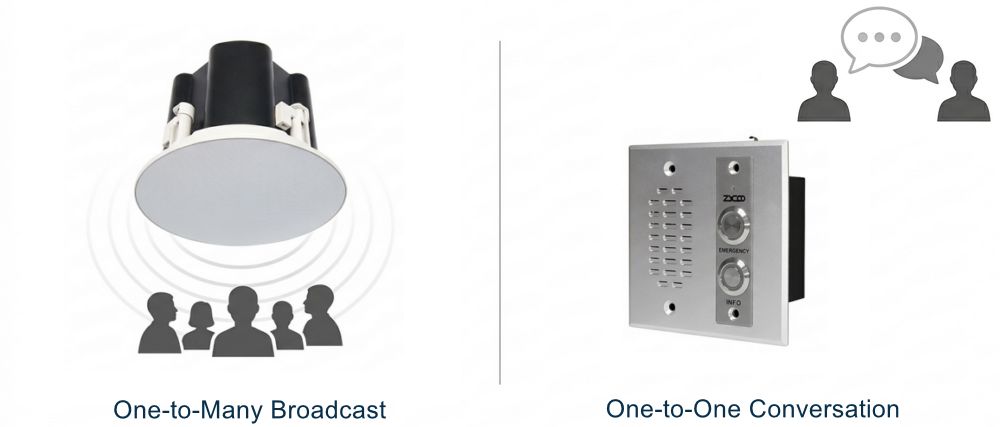
A paging system broadcasts voice messages from one source to multiple listeners simultaneously. When a page is triggered, the message is transmitted through speakers across a defined area or multiple zones. People within those areas hear the message automatically without needing to answer a call or interact with the system.
In modern deployments, IP paging systems use network-based speakers and paging gateways connected to an IP PBX or communication server. This allows messages to be triggered from phones, consoles, or automated events.
Because paging focuses on one-to-many communication, it is particularly effective in environments where speed and coverage are highly required like:
- General announcements
- Operational instructions
- Emergency alerts
- Schedule notifications
- Mass communication across large areas
What Is An Intercom System?
An intercom system enables direct voice communication between two specific endpoints.
Unlike paging, intercom communication is two-way. One user initiates a call, and the other side answers. Both parties can speak and listen.
In many modern facilities, IP intercom systems connect to the same network infrastructure as other communication devices. Intercom endpoints can register with an IP PBX, allowing calls to be routed through phones, monitoring stations, or management software.
Because intercom systems support direct conversation, they are commonly used when verification, coordination, or access control is needed, such as:
- Building entrances
- Security checkpoints
- Nurse stations
- Control rooms
- Service counters
Key Differences For Paging and Intercom Systems at a Glance
If you're in a hurry, this table covers the essential differences between paging and intercom systems.
Feature | Paging System | Intercom System |
|---|---|---|
Communication Direction | One-way broadcast | Two-way conversation |
Target Audience | Mass groups or specific zones | Specific endpoints |
Typical Devices | Network speakers | Intercom panels / door stations |
Network Behavior | Broadcast / multicast audio | SIP call session |
User Interaction | Passive listening | Active participation |
Deep Dive: System-Driven Paging vs Session-Based Intercom
At a system level, paging and intercom behave very differently.
Paging is designed as a broadcast mechanism. A single command triggers audio delivery to many endpoints simultaneously. In IP environments, paging often relies on multicast audio streams, allowing hundreds of speakers to receive the same message without creating separate network sessions.
Because of this architecture, paging systems scale extremely well. Whether a message is delivered to ten speakers or several hundred, the network load remains relatively stable.
Intercom systems work differently. They rely on session-based communication, similar to a phone call. When a user presses an intercom button, the system establishes a dedicated SIP call session between two endpoints.
This enables real-time conversation and confirmation, but it also means each interaction consumes system resources and requires user participation.
Understanding this distinction helps determine when broadcast communication is sufficient and when interactive communication is necessary.
Hybrid Architecture: Why Modern Workplaces Need Both
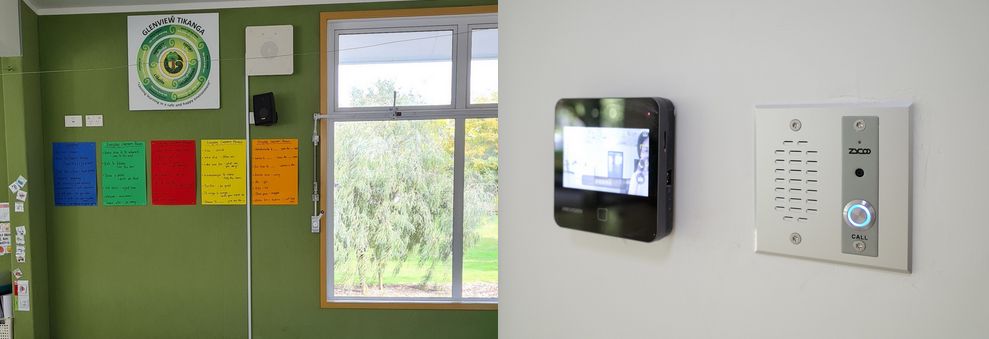
In modern communication environments, paging and intercom systems rarely operate as completely separate solutions. Most deployments combine both technologies within the same infrastructure to support different communication needs. Paging systems handle general broadcasts and emergency evacuations, while intercom systems support direct two-way communication at access control and internal help desks.
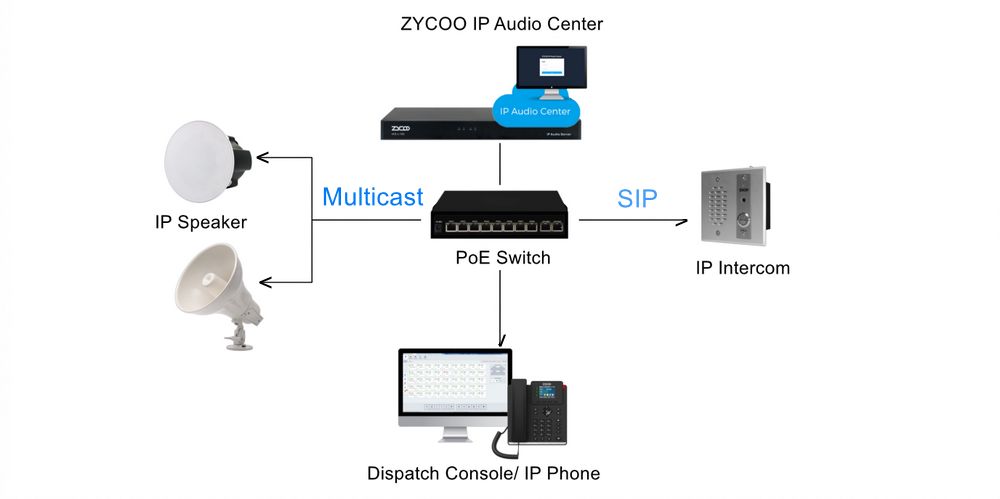
Modern IP-based communication infrastructure makes this integration easier than ever. Network speakers, paging gateways, and SIP-based intercom devices can operate on the same IP network and register as standard SIP endpoints, allowing paging announcements and intercom calls to be managed through the same management platform, like ZYCOO's IP PBX and IP Audio Center. In such a centralized management platform, administrators can configure paging zones, schedule announcements, and monitor intercom activity from a single interface.
This integration also enables automated workflows—for example, a door station can trigger an intercom call to security staff, while alarms or events can automatically activate paging alerts in predefined zones.
As organizations continue adopting IP infrastructure, integrated paging and intercom systems are becoming the standard approach for scalable workplace communication.
Planning Checklist for Paging and Intercom System
When planning a communication system that includes both paging and intercom capabilities, the following factors should be considered before design.
First, evaluate the coverage requirements. Large campuses, factories, or multi-building sites often require paging zones that allow announcements to reach specific areas without disturbing the entire facility.
Second, determine where two-way communication is necessary. Intercom stations are typically installed at entrances, restricted areas, service desks, or security checkpoints where interaction is required. Integration with existing systems is another important factor. Many organizations connect paging and intercom systems with existing IP PBX platforms, access control systems, or alarm systems to support automated communication workflows.
Finally, consider how the system will be managed on a daily basis. Centralized management platforms can simplify configuration, monitoring, and maintenance, especially in large deployments with hundreds of endpoints.
Conclusion
Paging systems and intercom systems serve different communication purposes. Paging is designed to broadcast information to a group of people. Intercom systems are designed for situations where confirmation, coordination, or controlled access is required.
In many facilities, the most effective solution is a combination of both technologies, allowing organizations to deliver broad announcements while maintaining the ability to communicate directly when needed.
Understanding these differences helps design an appropriate communication system that meets the desired communication requirements, improving overall efficiency.
FAQs
Q1. What is the difference between paging and intercom?
The main difference between a paging system and an intercom system lies in how communication is delivered. A paging system typically sends one-way broadcast messages to multiple speakers or zones at the same time. An intercom system supports two-way communication between specific endpoints, allowing people to speak and respond in real time.
Q2. Can a paging system support two-way communication?
Traditional paging systems are designed for one-way audio broadcasting. Listeners receive announcements but cannot respond through the system. However, modern IP paging systems can be integrated with intercom devices to enable two-way communication when needed. In these deployments, paging speakers handle mass notifications while intercom stations provide interactive communication.
Q3. Do modern IP systems support both paging and intercom?
Yes. Most modern IP communication systems support both IP paging and IP intercom functions within the same network infrastructure. By registering network speakers, paging gateways, and intercom stations as SIP endpoints, they can be managed through a centralized platform like ZYCOO's IP PBX or IP Audio Center for broadcast announcements, emergency alerts, and two-way conversations.
Q4. Is paging part of a public address system?
Yes, paging is a core function of a public address (PA) system. A public address system typically uses speakers and amplifiers to broadcast announcements or alerts across buildings, campuses, or public spaces. In modern deployments, IP-based PA systems often combine paging, scheduling, and emergency notification features with network speakers and centralized management platforms.