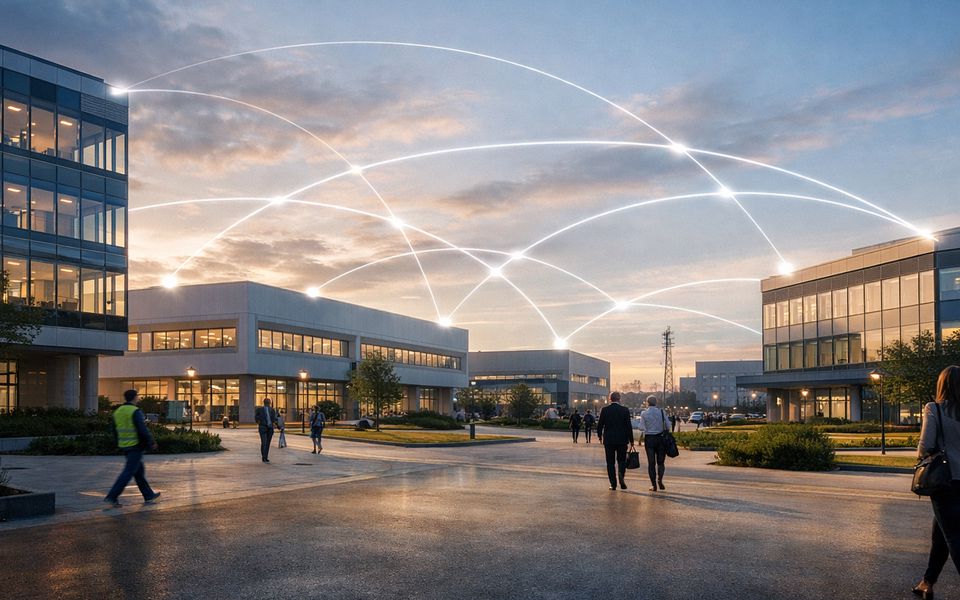
Network audio technologies are changing how large paging and communication systems are deployed. Traditionally, audio distribution relied on analog cabling and centralized amplifiers. While these systems still operate in many facilities, they often introduce limitations in scalability, installation complexity, and audio management.
In recent years, Audio over IP (AvIP) technologies have emerged as a practical alternative. Among them, Dante has become one of the most widely adopted platforms for professional network audio. By integrating Dante speakers into a modern IP infrastructure, system designers can achieve higher levels of synchronization and audio consistency across distributed environments.
The Essentials of Dante Technology
To understand why this shift is happening, we first need to address the foundational technology behind these devices.
What Is Dante Audio?
Dante (Digital Audio Network Through Ethernet) is an AoIP technology that transmits multi-channel digital audio over standard Ethernet networks. Instead of relying on analog wiring, Dante converts audio signals into digital packets and distributes them through standard Ethernet networks using hardware-based timing to ensure near-zero latency and perfect synchronization.
What Is a Dante Speaker?
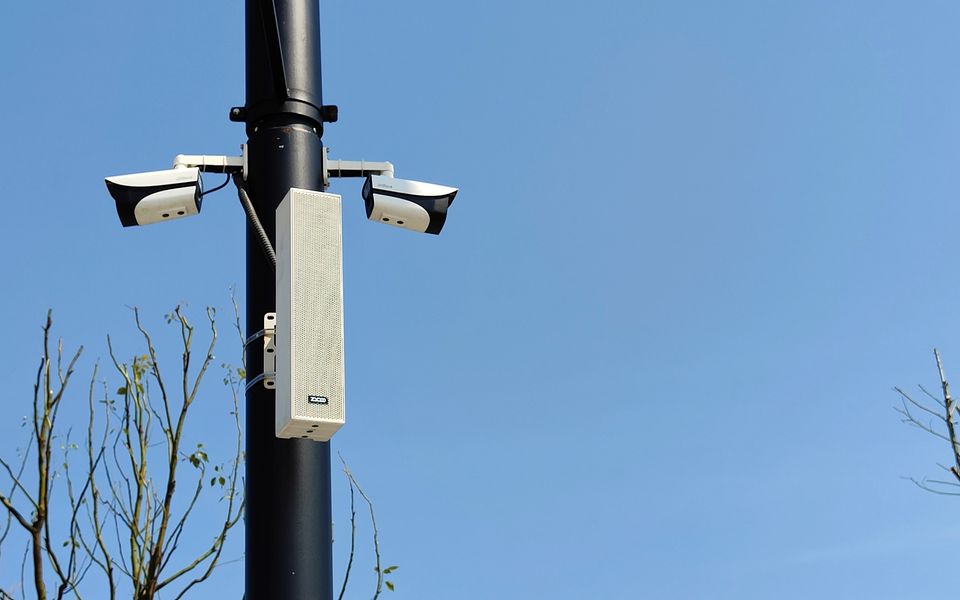
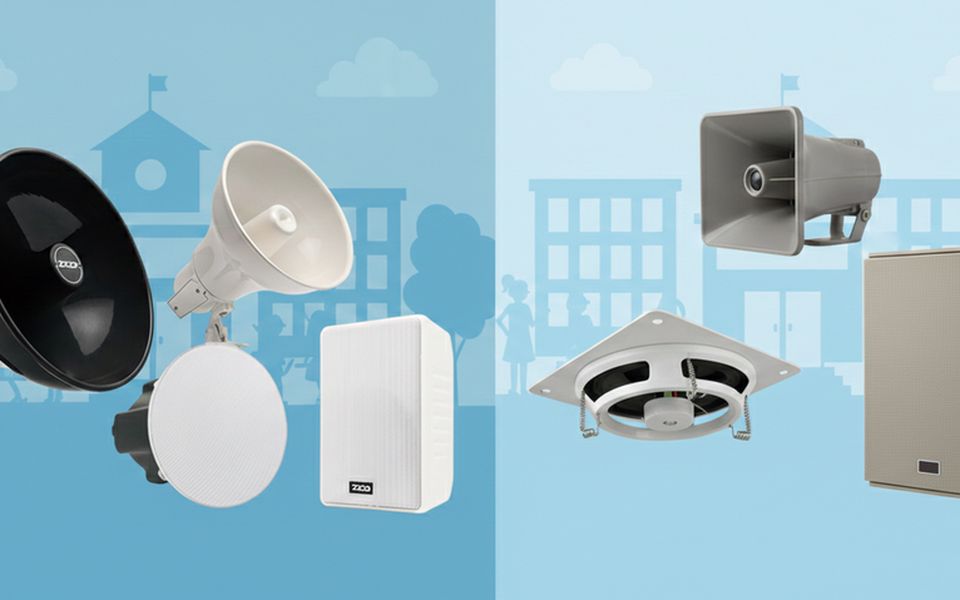
A Dante speaker is a loudspeaker with a built-in Dante network interface that receives audio directly from a Dante audio network. Instead of connecting to an analog amplifier output, the speaker becomes an addressable endpoint connected through standard Ethernet cabling and managed network switches within the networked audio system.
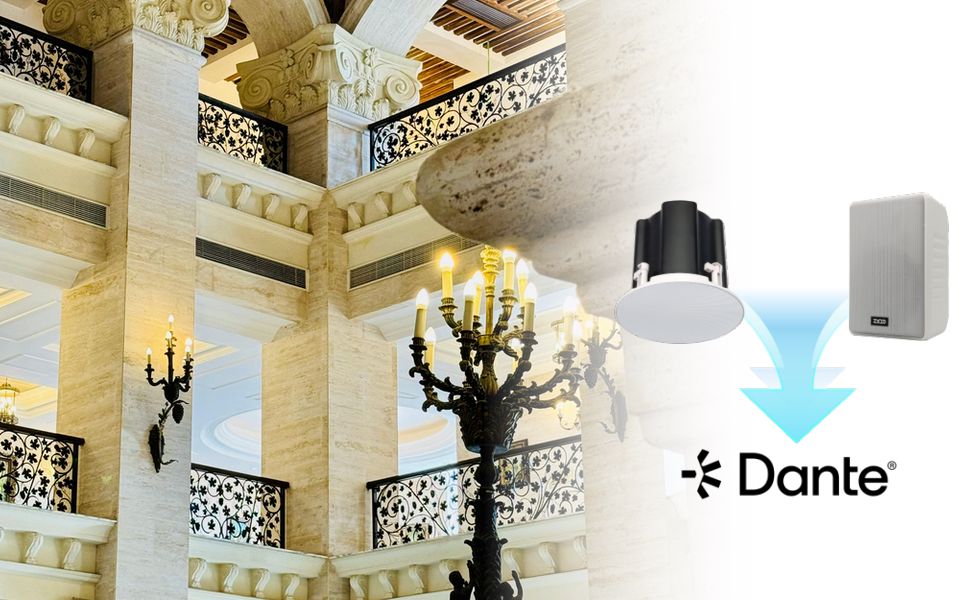
Dante speakers receive audio directly from the network and convert it to sound output at the endpoints. PoE-enabled Dante speaker also simplifies installation while reducing the need for additional power wiring.
How Dante Speakers Work
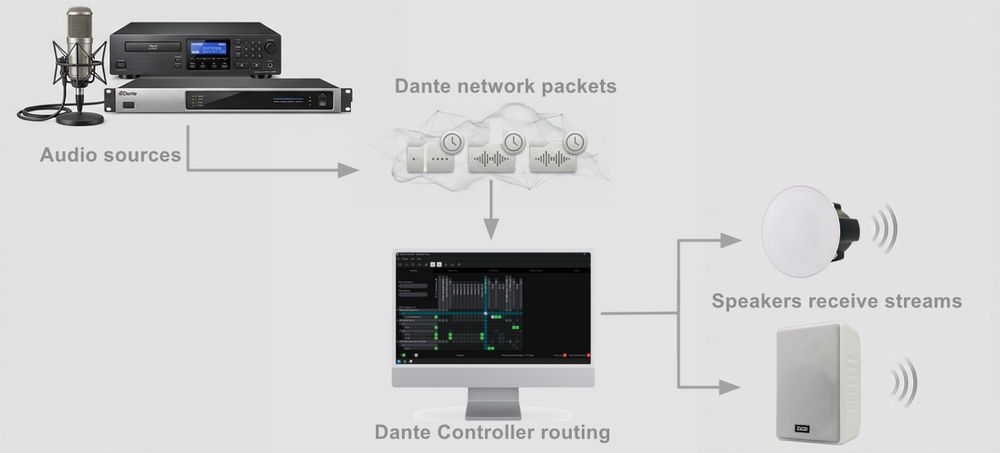
The magic of a Dante speaker lies in its "plug-and-play" discovery. Within a Dante-enabled network, the workflow follows a precise digital path:
- Audio sources such as microphones, media players, or paging servers generate the signal;
- The signal is encoded into digital packets and labeled with timing information;
- The administrator uses Dante Controller software to subscribe specific speakers to specific audio streams, without physical patch cabling involved.
- The speakers receive the subscribed audio stream and convert it into sound output to play with sub-millisecond latency.
Why Dante Is The Preferred Choice for Professional Audio
While standard IP speakers are excellent for general voice paging, Dante speakers are designed for environments where audio quality and synchronization are non-negotiable.
Consistent High-Quality Audio
Because the signal remains in the digital domain during transmission, the audio quality remains consistent with no buzz regardless of cable distance or system scale. This makes Dante ideal for background music, multimedia playback, or high-clarity announcements in luxury retail or hospitality.
Simplified Network-Based Installation
Most Dante speakers are PoE (Power over Ethernet) or PoE+ enabled. This means a single network cable provides the digital audio signal, the power to drive the internal amplifier, and the management data. This significantly reduces labor costs and eliminates the need for high-voltage electrical runs to every speaker location.
Precise Clock Synchronization
In large halls or long corridors, "echo" effects caused by slight delays between speakers can ruin the listening experience. Dante uses a sophisticated master clocking system to keep all speakers perfectly aligned, ensuring a coherent soundstage across massive facilities.
Traditional PA vs IP Speakers vs Dante Audio
To understand the role of Dante speakers, it helps to compare them with other common audio architectures used in public address systems.
Traditional public address systems typically rely on centralized amplifiers connected to passive speakers through dedicated analog cabling. However, expanding or modifying these systems often requires additional wiring and hardware.
With the growth of IP communication platforms, many organizations have adopted IP PA systems based on SIP speakers. These systems integrate directly with IP PBX or paging servers, allowing announcements and alerts to be delivered through the network.
Dante speakers represent another approach to audio distribution. Instead of focusing primarily on voice communication, Dante systems are designed for high-quality network audio transport, supporting synchronized multi-channel audio across large installations.
Comparison of Common PA System Architectures
System Type | Primary Use | Audio Quality | Latency | System Core | Connection Method |
|---|---|---|---|---|---|
Traditional PA | Voice paging, simple BGM | Analog | Low | Amplifier rack | Analog speaker wiring |
IP PA (SIP Speakers) | Voice paging, alerts | Narrowband / wideband voice | Low | IP PBX / paging server | Dante audio network |
Dante Audio System | High-quality audio distribution | High-resolution digital audio | Ultra-low | Ethernet network | Ethernet network |
How Dante Integrates with IP Paging Systems
In many modern communication deployments, Dante audio networks are used alongside IP paging systems rather than replacing them. While SIP-based systems manage call control, paging logic, and emergency announcements, Dante focuses on transporting high-quality audio across the network.
In this architecture, a paging server or IP PBX initiates announcements through SIP endpoints such as IP speakers or audio gateways. The audio signal can then be distributed through the Dante network to multiple speakers, amplifiers, or audio processors across different zones.
This separation of roles allows organizations to combine the control capabilities of unified communications platforms with the flexible audio distribution provided by Dante. As a result, large facilities can deliver synchronized announcements, background music, or multimedia audio through a unified network infrastructure.
Real-World Scenarios: When to Choose Dante Speakers
Dante speakers become essential when the requirements move beyond simple voice notification into the realm of professional audio-visual integration.
Audio-Visual Synchronization in Lecture Halls
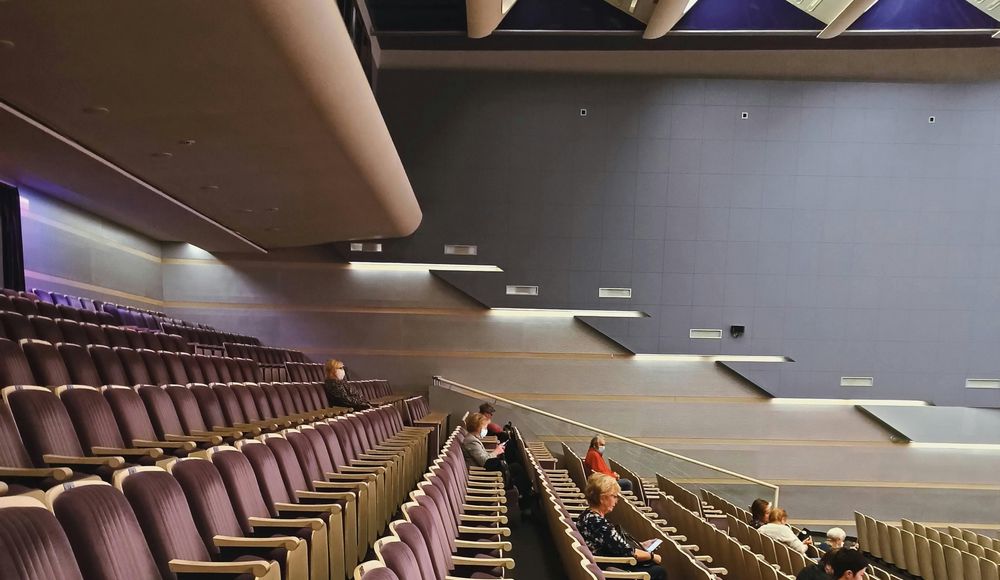
In large auditoriums or lecture theaters, any delay between the speaker's lips on a screen and the audio from the speakers is distracting. Dante's ultra-low latency (often as low as 0.15ms) ensures that audio and video remain perfectly in sync.
High-Fidelity Background Music in Hospitality
Luxury hotels and exhibition centers rely on atmosphere. Standard paging speakers often lack the frequency response needed for high-quality music. Dante speakers like the ZYCOO SW15 provide the wide frequency range and digital clarity needed to maintain a premium environment.

Multi-Device Interoperability
In a production environment—like a broadcast studio or a theater—you might have a Dante-enabled mixing console and wireless microphones. Using Dante speakers allows the entire audio chain to remain on a unified network protocol, managed by a single software interface.
ZYCOO's Role in the Network Audio Ecosystem
ZYCOO is committed to providing the "missing link" between standard IP communication and professional Dante environments. Whether you are building a pure Dante network or looking to integrate professional audio into your existing infrastructure, our hardware provides the solution.
Pure Dante Endpoints: SC15 & SW15
The SC15 (Ceiling Speaker) and SW15 (Cabinet Speaker) are designed as high-performance, pure Dante endpoints. By focusing exclusively on the Dante protocol, these speakers offer a streamlined, high-fidelity experience. Any Dante Controller can easily discover them, and they are perfect for zones where audio quality is the top priority.
Bridging the Gap: The SD Series Network Power Amplifiers
For projects that involve existing passive speakers but require network flexibility, the ZYCOO SD260 and SD2140 Network Power Amplifiers are the answer. These devices act as gateways, receiving Dante audio streams and delivering high-wattage analog power to traditional speaker lines.
By using the SD series, you can turn a legacy analog zone into a modern Dante-addressable zone, allowing for a hybrid approach that protects your existing hardware investment while upgrading your system’s intelligence.
Conclusion
As audio systems continue moving toward IP-based infrastructure, technologies like Dante are no longer reserved for recording studios. They are becoming essential components of modern campus paging and commercial audio.
While ZYCOO continues to expand its IP Audio and network audio portfolio, our Dante-enabled solutions (the SC15, SW15, and the SD series amplifiers) ensure that our customers can bridge the gap between mass notification and professional audio performance. By choosing the right tool for the right zone, you can build a future-ready deployment that delivers both safety and sound quality.