Modern public address systems are no longer isolated audio tools. As communication infrastructures move to IP networks, paging systems are also evolving.
IP PA systems are designed to work over standard networks, offering more flexible control, easier expansion, and better integration with other communication platforms.
This article explains what an IP PA system is, how it works from a system design perspective, and when choosing an IP PA makes sense compared to traditional PA solutions.
What Is an IP PA System?
An IP PA system is a type of public address system built on IP networks. The difference isn't what it does, but how it's designed and how it runs. Instead of relying on fixed audio lines and centralized amplifiers, audio, control, and management all travel over the same IP infrastructure that already exists in most buildings.
From the outside, it still delivers announcements, alerts, and background audio. Under the hood, though, the system behaves more like an IP communication platform than a traditional PA setup. That shift changes how the system is deployed, controlled, and expanded over time.
Why IP PA Is Not Just “PA Over the Network”
One common assumption is that IP PA simply means plugging a traditional PA system into Ethernet. That view misses the real change. Once PA moves to IP, the system becomes logic-centric.
Control Logic Moves Into Software
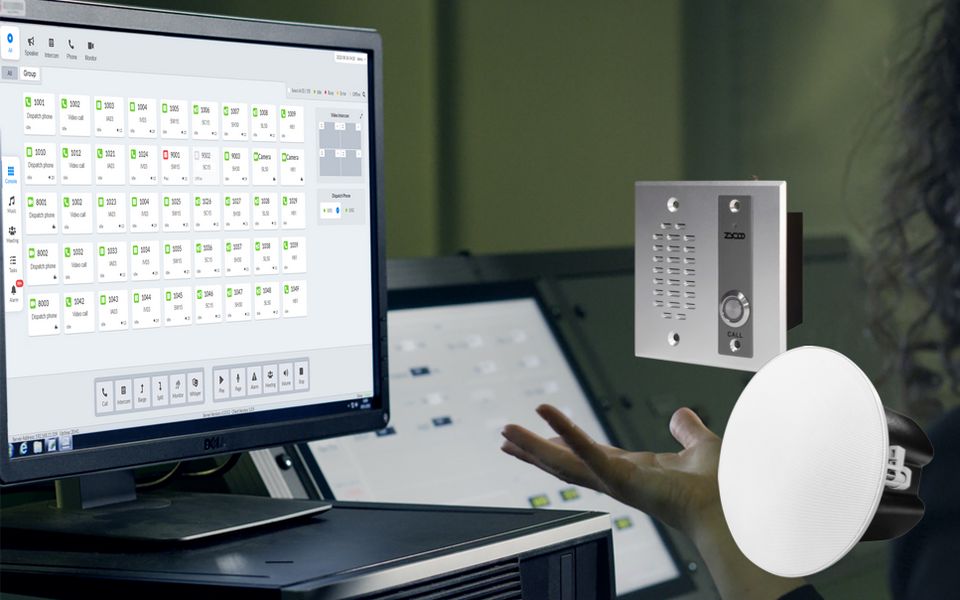
The first shift happens in control logic. Traditional PA control is often tied to physical zones, relay panels, or dedicated paging consoles. In an IP PA system, control lives in software. Paging rules, priorities, schedules, and permissions are handled centrally, often on an IP audio server like ZYCOO's IP Audio Center. Devices register once and follow unified rules, instead of relying on fixed wiring logic, making large or distributed sites manageable as layouts change.
The Deployment Model Changes
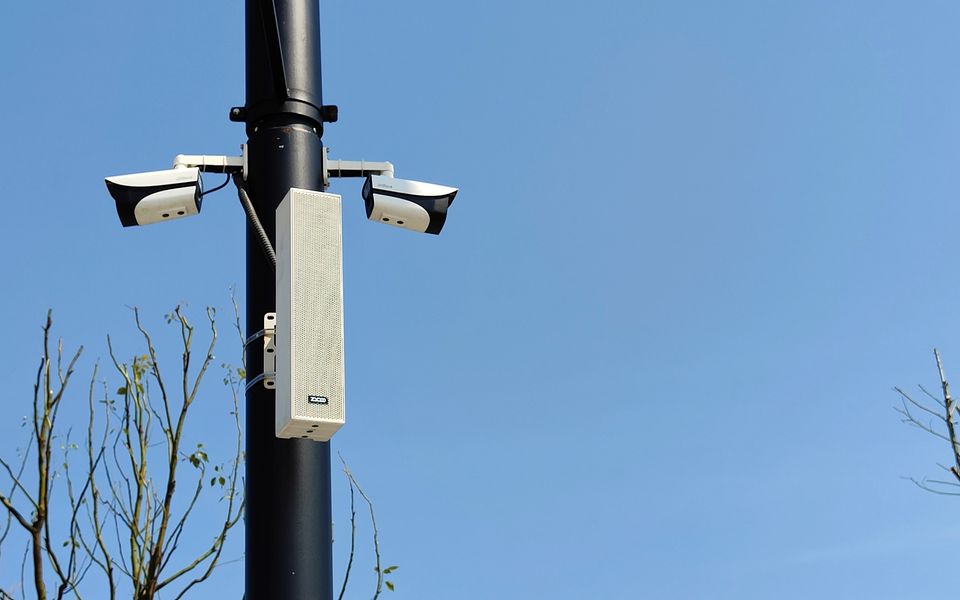
With IP PA, speakers become network endpoints. They connect to switches, draw power via PoE, and can be placed wherever the network reaches. Expansion becomes a network planning task rather than a rewiring project. For multi-building campuses or mixed indoor-outdoor sites, this reduces rollout time and removes the dependency on centralized amplifier rooms.
Integration Capability with IP PBX
Once PA runs on IP, it can interact with other IP systems meaningfully. Paging can be triggered by events, linked to intercom calls, or coordinated with IP PBX platforms. The PA system becomes a part of the infrastructure. This is where IP PA naturally overlaps with broader unified communication workflows without adding unnecessary complexity.
That's why IP PA shouldn't be viewed as a transport upgrade. The architecture itself is different, and that difference shapes everything that comes after, from system design to long-term operation.
Architectural Differences Between IP PA and Traditional PA
The real difference between IP PA and traditional PA shows up in how the system thinks, not in what boxes are used. Traditional PA follows a linear path. Audio leaves a source, passes through amplifiers, and ends at fixed speaker lines. Control and audio move together, and the system behaves the same way every time it's triggered.
An IP-based PA system works more like a communication network. Signal flow splits early. Control goes one way, audio another. A paging request is handled first as a command. Only after that does audio start moving. This separation changes how the system scales and adapts.
Control also shifts from physical to centralized logic. In a traditional setup, zones are often hardwired. Changing coverage means touching cables, relays, or distribution hardware. With IP PA, zones are defined in software. A speaker belongs to a zone because the system says so, not because of where the wire lands. In platforms like ZYCOO's IP audio architecture, this logic lives on the paging or audio server, which coordinates devices across the network.
Distribution works differently, too. Traditional PA pushes audio outward from a central point. IP PA distributes both control and audio across the network. Each endpoint understands when to listen, when to play, and when to stay silent. The system doesn't rely on a single audio path. It relies on shared rules and network awareness.
How IP PA Systems Are Typically Designed
To understand how an IP PA system works, it helps to picture it as a conversation, not a broadcast cable. Everything starts with signaling. When someone initiates a page, the system sends a control message first. In many IP PA designs, this uses SIP. The signal doesn't carry audio. It carries intent. Who is paging, which zones are involved, and what priority applies.
Once that signaling step is done, audio streaming kicks in. The voice or alert audio is packetized and sent over the network, often using RTP streams. Depending on the design, the audio follows network rules and can be sent as unicast to specific devices or as multicast when many speakers need to play the same message simultaneously.
The network itself becomes a core part of the system. Switches, bandwidth, and VLAN planning affect performance just as much as speaker placement. IP PA depends on network design and can integrate cleanly with existing infrastructure. For example, in ZYCOO-based deployments, IP speakers, paging servers, and intercom devices all register and communicate over the same IP environment, using shared signaling and audio transport.
When viewed this way, IP PA stops feeling abstract. Control flows first. Audio follows. The network holds everything together.
What IP PA Enables in Complex Projects
Once a project moves beyond a single building or a fixed layout, traditional PA systems start to feel rigid. It's not easy to add new zones or change priorities. Over time, the system becomes harder to manage, as it was never meant to stretch that far.
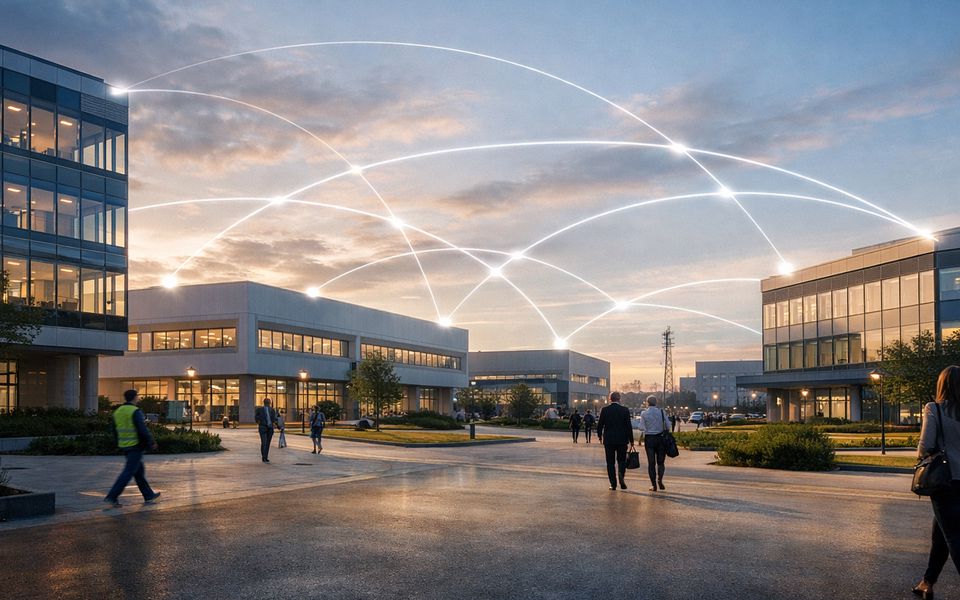
IP PA handles complexity in a different way. In multi-building sites, speakers across separate locations can belong to one logical system, even if they sit on different network segments. Paging doesn't care where a device lives physically. It only cares about how the system defines it. That makes distributed paging and unified control far easier to maintain as a site grows.
Remote management is another shift. With IP PA, daily control doesn't require being on-site. Zone changes, priority rules, and scheduling can be handled centrally. The same control layer can manage paging, background audio, and device status without touching the physical endpoints, making IP PA fit projects where staffing and access are limited.
Complex projects also tend to mix everyday communication with critical messaging. Routine announcements, timed audio, and emergency paging often share the same speakers. Traditional PA systems can do this, but the logic quickly becomes layered and fragile. IP PA treats these as different events with different rules. Priority handling, preemption, and system-wide paging are part of the core design, not add-ons.
Key Considerations Before Choosing an IP PA System
IP PA offers clear benefits, but it's not a drop-in fix for every site. The first question is always network readiness. Audio traffic isn't heavy, but it is sensitive. Switch quality, VLAN design, and multicast support all matter. A weak or poorly segmented network will limit what an IP PA system can deliver, no matter how capable the endpoints are.
Reliability deserves the same attention. Traditional PA often feels dependable because it's simple. IP PA relies on more moving parts. That doesn't make it fragile, but it does mean redundancy needs to be planned. Power, network paths, and server roles should match the project's risk profile. In well-designed systems, failover and recovery are part of the architecture, not an afterthought.
Ownership is another point. IP PA sits at the boundary between IT and facilities. Someone has to manage the network side, and someone has to own the operational rules. When those roles are unclear, even a good system can struggle. Projects that work best usually define this early, especially when the PA system integrates with other IP-based platforms.
Smaller, static sites with no need for remote control or system integration may gain little from the shift. IP PA shows its value when flexibility, scale, and centralized management matter.
IP PA as Part of a Unified Communication Platform
In many projects, IP PA doesn't stand alone for long. Once it sits on the same network as voice and signaling systems, it naturally becomes part of a unified communication platform. Paging, calling, and intercom start to share the same logic.
A SIP-based PA system can register alongside an IP PBX and respond to the same control flows. A phone call can turn into a live page. A scheduled task can trigger a pre-recorded announcement. Intercom events can escalate into area-wide paging without switching tools. None of this requires deep protocol work on the user side. The system handles it through defined signaling and routing rules.
This is where IP PA fits well with intercom systems and emergency workflows. An access event, a sensor input, or a manual trigger can automatically initiate paging. Audio reaches the right zones with the right priority at the right moment. In platforms built around ZYCOO IP PBX and IP audio solutions, paging, intercom, and call control share the same foundation, making system behavior predictable as projects grow and requirements change.
Is IP PA the Right Choice for Your Project?
An IP PA system changes how paging is designed, controlled, and connected to the rest of a communication environment. Instead of relying on fixed audio paths, it uses IP signaling, software-defined logic, and networked audio delivery to support centralized control, flexible zoning, and integration with other IP systems.
Whether an IP PA system fits a specific project depends on operational needs, network conditions, and how the system is expected to operate over time. For projects where paging, intercom, and voice systems need to work together, early planning makes a difference. To explore IP PA system design options or learn how ZYCOO supports IP-based paging in real deployments, you can contact the ZYCOO team for more information.