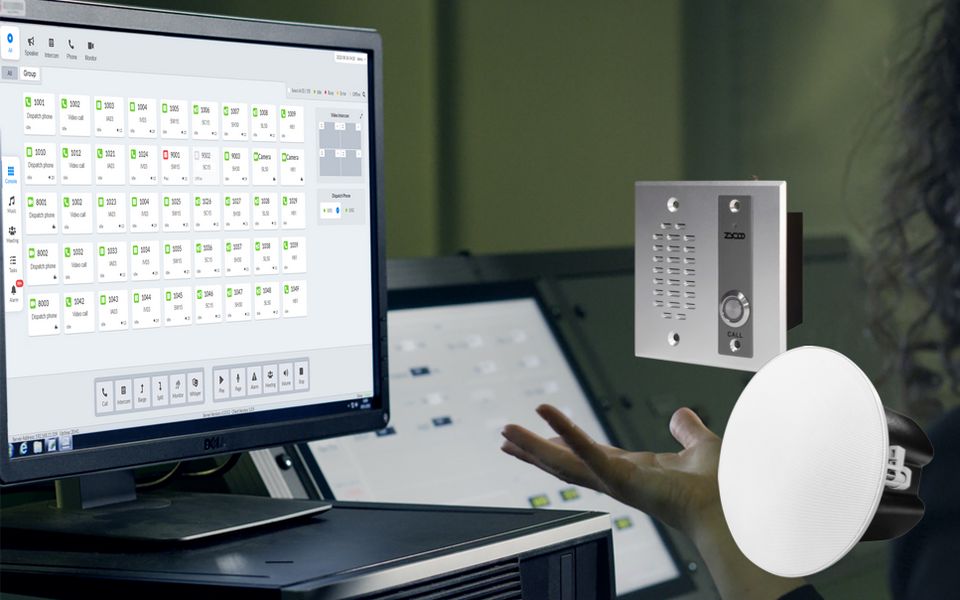
Communication in hospitals always needs to be instant and clear. A delayed message or missed call can easily disrupt workflows, and sometimes the consequences are much more serious.
This is where a hospital intercom system becomes essential. It allows staff to speak directly across rooms, departments, and entrances without relying on phones or overhead announcements. Instant two-way communication shortens response time and keeps coordination simple during busy shifts.
As healthcare facilities continue to modernize their infrastructure, many are moving away from traditional paging setups toward IP-based hospital intercom systems that integrate with broader healthcare communication platforms.
What Is a Hospital Intercom System in Modern Healthcare?
A hospital intercom system is a communication network that allows staff, patients, and security teams to communicate instantly through dedicated audio devices installed throughout a facility. These systems support two-way voice communication between locations such as entrances, nurse stations, isolation rooms, and operating areas.
In modern hospitals, intercoms increasingly operate over IP networks rather than standalone analog wiring. That shift allows them to work alongside existing communication tools such as IP phones, paging systems, and unified communication platforms.
Key Components of a Modern Hospital Intercom System
Although implementations vary across facilities, most hospital intercom systems share a similar architecture built around several core components.
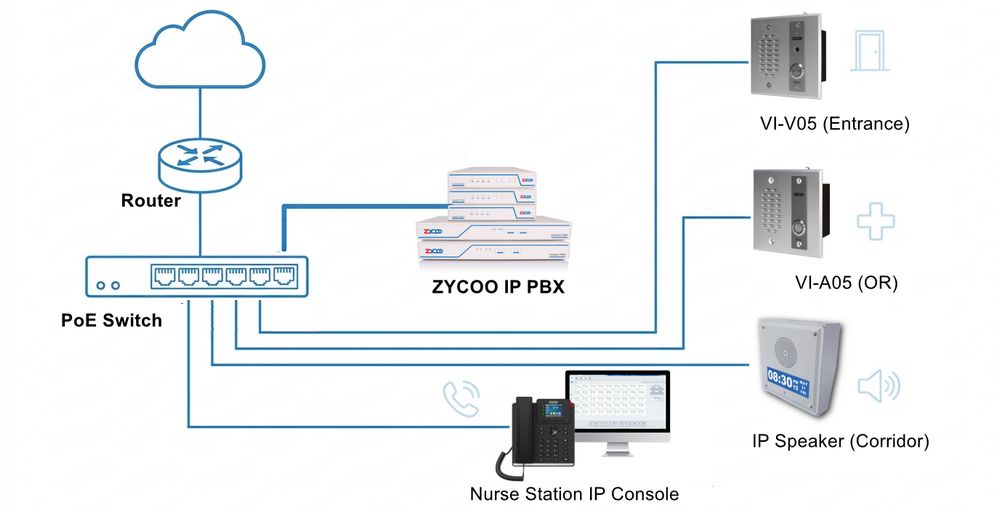
System Core: At the center is the communication server, often an IP PBX. It manages call routing, device registration, and system logic. Most hospitals use SIP-based platforms to connect intercoms with desk phones, softphones, and other IP devices. Solutions like the ZYCOO IP PBX systems provide a flexible core that supports SIP intercom endpoints and integrates with a broader unified communication infrastructure.
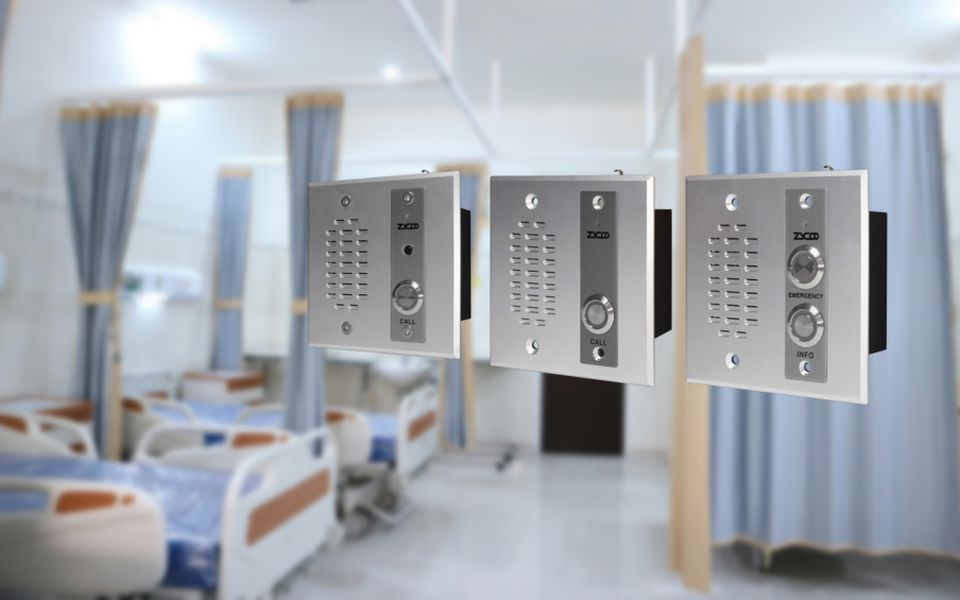
Communication Endpoints: Thses rang from wall-mounted IP intercoms at entrances to desk intercom units at nurse stations. Some models include built-in cameras for video verification, especially at controlled entry points. In healthcare environments, background noise is constant, so high-definition audio and echo cancellation are essential.
Network Backbone (PoE & LAN): Modern systems rely entirely on the hospital's Local Area Network (LAN). Most professional IP endpoints are powered via Power over Ethernet (PoE). This is a game-changer for installers. A single CAT6 cable carries both data and power to the device, eliminating the need for local power outlets at every bedside or doorway.
Infrastructure Bridging: SIP paging gateways and analog adapters bridge older systems into the IP network. Many hospitals still operate legacy analog paging or door phone systems. Replacing everything at once isn't always realistic. Using ZYCOO SIP paging gateways allows existing analog amplifiers or speakers to connect to a SIP-based system. This approach supports phased upgrades instead of disruptive full replacements.
Hospital Intercom vs. Nurse Call vs. Paging
Besides hospital intercom systems, the nurse call system and paging system are also used in hospitals for different purposes. Here is a comparison table for these three systems.
Feature | IP Intercom System | Nurse Call System | Paging System |
|---|---|---|---|
Primary Purpose | Instant two-way staff/visitor communication | Patient-to-nurse assistance alerts | One-way mass announcements |
Direction | Two-way intercom communication | One-way alert | One-way Broadcast |
Common Use | Entrances, ORs, Isolation wards, ... | Patient bedsides, Bathrooms | Hallways, Public lobbies |
ZYCOO Role | SIP endpoints (VI-D05, VI-A05, VI-A05) | Integrated via SIP triggers | SIP Gateways & IP Speakers |
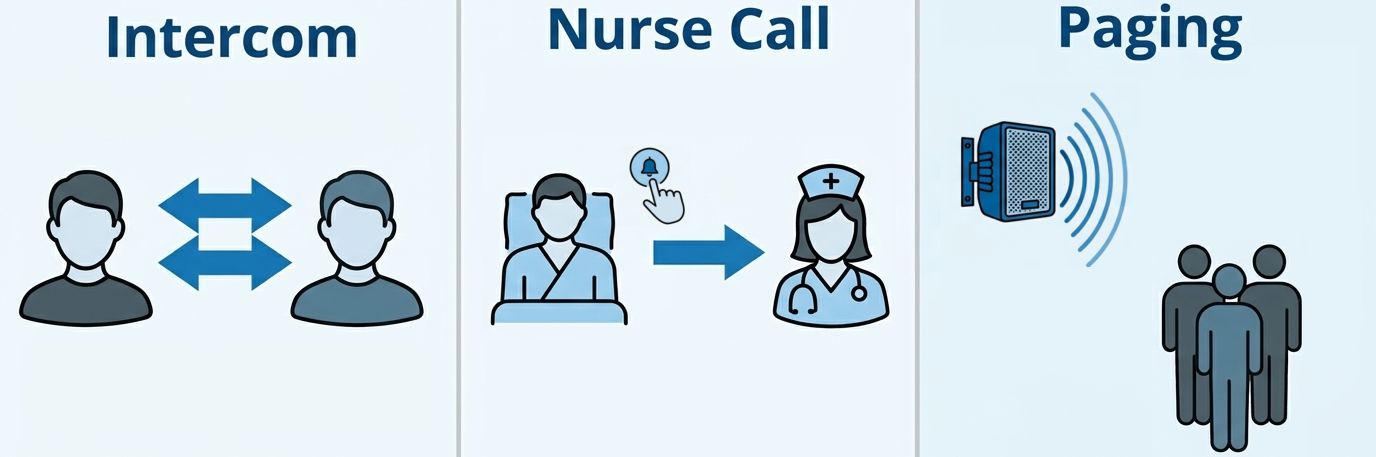
While these systems serve distinct operational roles, they are most effective when integrated into a single IP-based ecosystem. By linking intercoms, nurse calls, and paging through a unified SIP server like ZYCOO's IP PBX, hospitals can ensure that no critical alert or communication is missed across different departments.
How IP-Based Intercom Systems Are Transforming Healthcare Communication Workflows
Modern healthcare infrastructure is no longer just about hardware; it's about how seamlessly information flows across a facility. Transitioning to IP-based intercom systems allows hospitals to move beyond the limitations of isolated analog wiring, enabling a smarter, more integrated approach to coordination. By leveraging existing network architecture, these systems solve critical communication bottlenecks through five key functional shifts.
1. Instant Response for Critical & Clinical Care
In ERs or ICUs, staff can't afford delays. IP intercoms provide a direct voice path for both urgent alerts and everyday coordination, such as clarifying tasks or requesting assistance. By enabling one-touch intercom communication at nurse stations and treatment areas, these systems can reduce response times and keep nurse call systems focused on patient-specific needs.
2. Seamless Unified Communication Integration
Intercoms should not be isolated tools. Supporting standard SIP protocols, ZYCOO devices can function as extensions of your existing IP PBX or voice infrastructure. This allows intercom calls to route directly to desk phones, mobile clients, or paging zones, ensuring that critical messages reach the right person through the most appropriate device without switching platforms.
3. Secure Access & Visual Verification
Managing boundaries like restricted units or ambulance bays requires a balance of safety and flow. Video-enabled units, such as the VI-V05, allow staff to perform visual verification and two-way voice screening before granting access. This centralized control improves security while protecting sensitive areas from unauthorized entry.
4. Simplified Management & Scalability
Managing multi-building facilities can be streamlined through a centralized web interface. IT teams can remotely configure endpoints and push updates, eliminating the need for manual on-site maintenance. As departments expand, adding new devices is as simple as connecting to the LAN. Furthermore, the system supports phased upgrades via SIP gateways to seamlessly bridge the traditional analog communication infrastructure with the new system.
5. Specialized Hygiene & Safety Design
Unlike standard commercial intercoms, healthcare devices must withstand frequent disinfection. ZYCOO's VI-series features sealed, durable surfaces and high-contrast tactile buttons. Combined with high-definition audio and echo cancellation, these devices ensure clear, reliable communication in the loudest and most demanding medical environments.
Where Are Hospital Intercom Systems Used?
Hospital communication spreads across entrances, treatment rooms, restricted zones, and staff work areas. Intercom systems appear in these areas, supporting both clinical workflows and facility operations.
Emergency Rooms
Emergency departments are among the busiest parts of a hospital. Communication needs to be quick and direct. Intercom units installed near treatment areas or internal access points help staff reach nearby teams without leaving their position. Calls can route to nurse stations or specific departments through the hospital's IP PBX.
Isolation Wards
In Isolation wards, two-way intercom devices allow staff to speak with people inside the room without opening the door. This supports safety procedures while maintaining communication. The video-supported intercom models also allow staff to visually check the situation before entering.
Operating Theaters
Operating rooms run under strict hygiene standards and carefully controlled workflows. Communication with the outside team often needs to happen without interrupting sterile procedures.
ZYCOO's contactless VI-A05 intercom enables staff to trigger urgent calls by waving their hands, without the need to touch the device. Calls can also reach nearby nurse stations or support departments.
Hospital Entrances
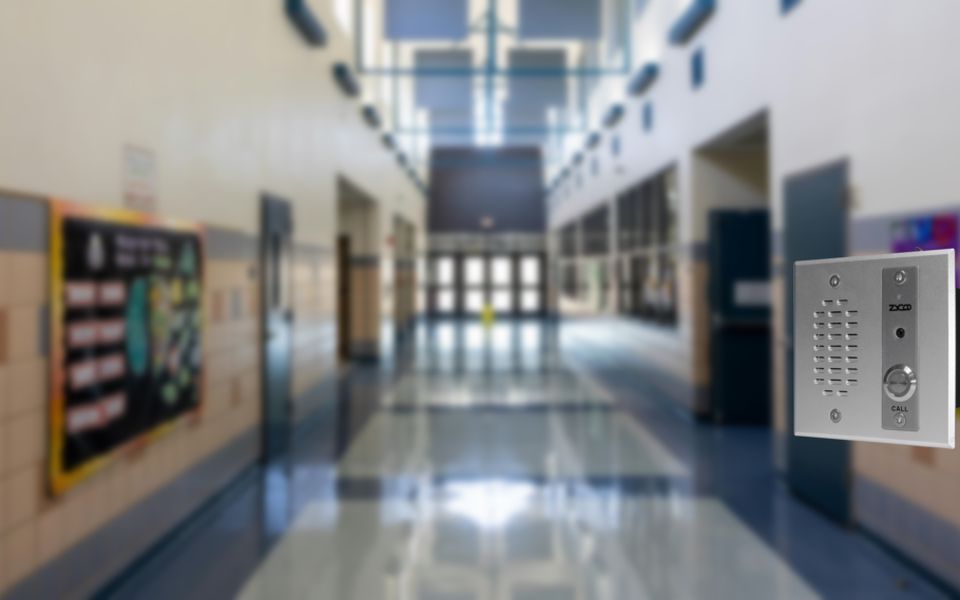
Main entrances, ambulance bays, and restricted access points often rely on intercom systems for visitor communication. Video-enabled intercom models allow staff to verify identity before unlocking restricted doors.
Nurse Stations
Nurse stations often serve as communication hubs where calls from intercom devices, patient rooms, and entrance stations are received and managed. They can also initiate calls to intercom units when needed. In an IP-based hospital communication system, these interactions can happen through desk phones or operator consoles.
How to Choose the Right Intercom System for Your Facility
Selecting an intercom system for healthcare facilities usually starts with a simple question: build a new communication network or upgrade what already exists. The answer often depends on the facility's infrastructure and long-term plans.
Assessing Existing Infrastructure
Before choosing a new intercom platform, it's important to evaluate the facility's current communication systems. Some hospitals may require a full upgrade, while others can extend existing infrastructure through gateway devices and hybrid solutions.
This assessment helps determine whether a phased migration approach will work better than a complete system replacement.
Plan for Long-Term Expansion
Healthcare facilities expand over time. The communication platform installed today should still support additional buildings, departments, or devices several years down the line.
IP-based intercom systems typically offer the flexibility required for long-term growth, as new endpoints can be added through the network without major infrastructure changes.
Compliance and Security Considerations
Healthcare facilities must meet strict privacy and accessibility standards. ZYCOO solutions support HIPAA compliance through encrypted SIP signaling and secure call logging. To align with ADA guidelines, the VI-series features high-contrast tactile buttons and LED status indicators to assist users with sensory impairments. Additionally, the VI-V05 intercom provides one-way visual verification, allowing staff to securely identify visitors and monitor restricted areas via integrated cameras before granting access, ensuring both safety and operational transparency.
Conclusion
Hospitals rely on communication every minute of the day. Doctors coordinate treatment. Nurses respond to patient needs. Security teams monitor entrances. In each situation, information has to move quickly and clearly.
A well-designed intercom system can quietly support daily workflows while improving safety across the entire hospital environment. They connect departments, control access points, and provide immediate two-way communication when it matters most.
ZYCOO provides specified IP Audio solutions for hospitals with integrated IP intercom, IP PBX and IP paging solutions that support flexible hospital communication architectures. If you're exploring options for a hospital communication project, it may be worth discussing the specific layout and operational needs of the facility.