If you're trying to decide whether an outdoor paging system should run on analog speaker cable or over your network, here's the short version: once a site has more than one zone or is likely to grow, IP wins on flexibility and long-term cost. You give up the simplicity of a single amplifier and a loop of 100V cable, but you gain remote zoning, easier fault diagnosis, and a system that scales without a rewire.
That trade-off is the whole story of this article. Outdoor paging has always meant fighting distance, dust, and weather. What's changed is how the signal gets from the control room to the speaker, and what that choice means once the system is actually sitting on a pole in the rain. We'll walk through what makes a PA system "IP" in an outdoor context, how it stacks up against a traditional analog run, what the design work actually involves, and where this kind of system tends to get deployed in practice.
What Is an IP Outdoor PA System?
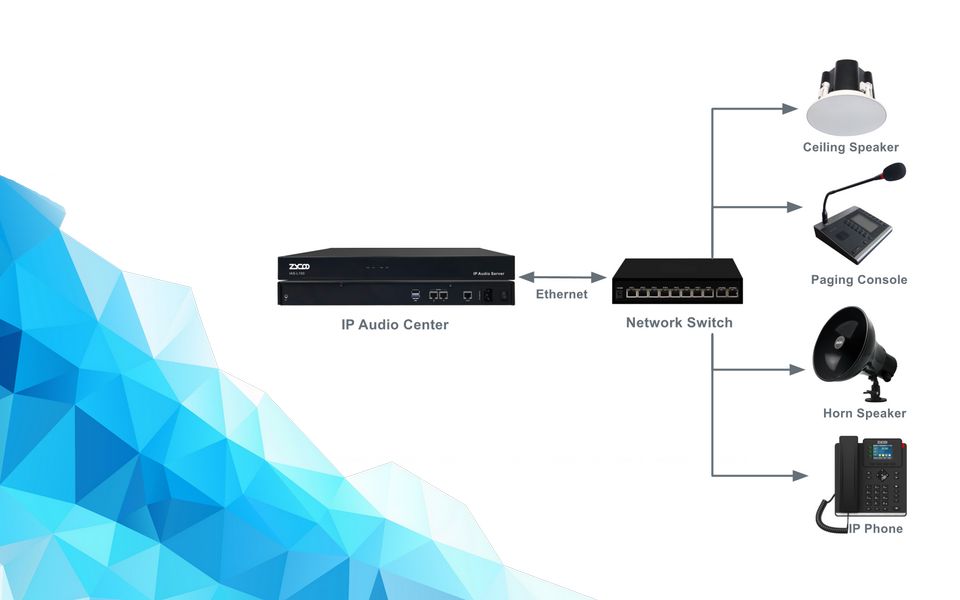
An IP PA system for outdoors delivers paging, announcements, background music, and emergency evacuation messages to outdoor speakers over a standard Ethernet network instead of dedicated 70V or 100V speaker cable. The audio, the power, and the control signal all travel over the same Cat5e/Cat6 run, using PoE (Power over Ethernet) to drive the speaker and SIP as the signaling protocol that handles calls, paging, and zone addressing.
That's really the core distinction. A conventional outdoor PA system needs a centralized amplifier pushing a constant-voltage line out to passive speakers. An IP system moves the amplification into the speaker itself and treats each unit as its own addressable network endpoint. It sounds like a small architectural difference, but it changes almost everything downstream: how you cable a site, how you add a zone later, and how you find a fault when one speaker in a zone goes quiet.

Core Components of an IP Outdoor PA System
An IP outdoor paging system needs fewer distinct pieces of hardware than most people expect, since a few traditional roles get absorbed into the speaker itself. Here's what actually goes into a deployment and what each piece is doing.
Outdoor IP Speakers
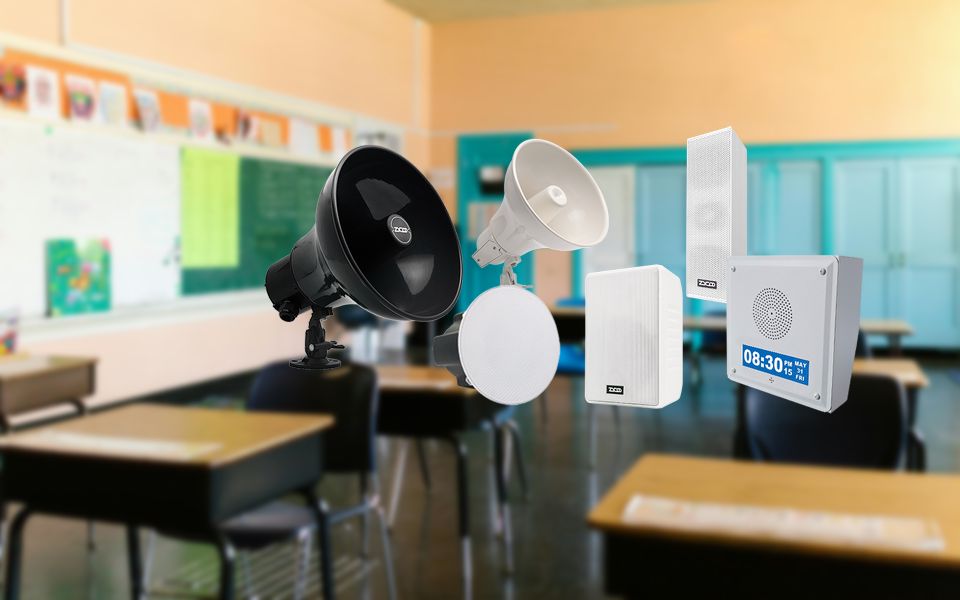
Horn speakers use a horn-shaped acoustic structure that concentrates sound over long distances, which makes them well suited to clear voice announcements across factories, schools, transportation hubs, and other large open areas. Column speakers trade some of that throw distance for broader, more even coverage across a wider listening area.
ZYCOO's SH10 and SH30 horn speakers and SL30 column speaker fall into this category. Each has an amplifier built in, so there's no separate power amp sitting in a rack somewhere driving a speaker line, a real architectural change from how outdoor PA has traditionally been built.

Outdoor-Rated PoE Switch
Outdoor IP speakers need a network switch capable of delivering both power and data over a single Ethernet run. For outdoor deployments, that switch (or the cabinet housing it) needs its own weatherproofing and enough power budget to cover every connected speaker without derating under load. It's worth sizing this early in the design process, since undersizing the switch is one of the more common causes of speakers underperforming after install.
Central Management Software and Consoles
Once speakers are on the network, something needs to manage them. ZYCOO's IP Audio Center is the platform side of that: zoning, scheduling, and monitoring which endpoints are online. On top of it, the IP Audio Dispatch Console gives operators a multi-platform desktop or mobile interface to trigger live paging and broadcasts from anywhere on the network.
For sites that don't need a full server-based setup, ZYCOO's M100 Dispatch Microphone Console offers a serverless alternative: a physical console an operator can use to page zones directly without standing up separate management software.
Paging Gateway for Analog Migration
Not every zone needs to be ripped out and replaced at once. ZYCOO's X10 IP Paging Gateway converts SIP audio streams from the IP system back into analog output, so an existing amplifier and its passive speakers can register as an endpoint on the new network instead of being replaced outright. That makes it a practical option for sites migrating in stages, keeping working analog zones in place while new outdoor areas go in as native IP from day one.
IP vs. Analog for Outdoor Deployments
Both approaches will get sound to a speaker outdoors. The difference shows up in how the system behaves once it's installed, especially at scale.
A 70V or 100V analog line is genuinely well suited to long, simple runs. It's not a fragile or outdated technology; professional installers still use it every day. The tradeoff shoes up once a site needs to grow or change.
Consideration | Analog (70V/100V) | IP (PoE/SIP) |
|---|---|---|
Cabling and Power | Dedicated speaker cable per line | One Ethernet cable carries power and data |
Adding a Speaker | Run new cable and rebalance the amplifier load | Run one Ethernet cable and provision the speaker in software |
Zoning | A new zone usually requires a new amplifier channel and rerouted cabling | Group, regroup, or isolate speakers in software |
Fault Diagnosis | Walk the speaker line to trace the fault | Offline endpoints are flagged automatically on the management screen |
Best Fit | Small, single-zone sites with no plans to expand | Multi-zone, growing, or widely distributed sites |
None of this makes analog the wrong choice for every site. A small, single-zone installation with no plans to expand may not need the added complexity of a network system. But for anything spread across a parking structure, an industrial yard, or a multi-building campus, where zones change, coverage gets extended, and remote diagnosis actually matters, IP tends to be the more practical long-term choice.
How to Design an IP Outdoor PA System
Good outdoor PA design isn't just about turning the volume up until people can hear it. It comes down to acoustic planning, environmental protection, and network structure working together. Get one piece wrong, and it tends to undermine the other two.
Coverage and Acoustic Design
Your speakers need to be louder than whatever noise already exists on site. A common rule of thumb: aim for output 10 to 15 dB above the ambient noise floor at the listening area.
Loudness alone won't make an announcement understandable, though. Placement and orientation matter just as much. Horn speakers tend to work best here, since their directional throw concentrates sound toward listeners instead of scattering it into the open sky.
Mounting height matters too. Most outdoor speakers sit somewhere in the 3 to 6 meter range, high enough to clear vehicles and people. Keep spacing consistent, and let coverage overlap slightly between units so you don't leave dead zones.
Weatherproofing and Environmental Requirements
Anything mounted outdoors has to survive the local climate. That starts with the IP rating on the speaker enclosure. IP65 is generally the practical minimum for full outdoor exposure. It protects against dust ingress and water jets from any direction.
Beyond the enclosure, connectors need to be sealed at every cable entry point. Mounting hardware should resist corrosion over years of exposure, not months.
Equipment on a pole or rooftop is the most exposed part of the system to a power event, so surge and lightning protection matters most there.
Zoning, Multicast, and Remote Management
Zoning lets different areas receive different content. Background music in a visitor area. A security alert only at the entrance. No need to broadcast to the entire site every time.
For larger deployments, multicast delivery keeps network load manageable. One audio stream reaches a group of speakers instead of a separate stream for each.
Centralized management ties it together. Through ZYCOO's IP Audio Dispatch Console, operators can see which speakers are online, schedule recurring announcements, and trigger broadcasts to a specific zone, all from one interface, rather than visiting each outdoor location in person.
Real IP Outdoor PA Deployments
Here are some ZYCOO deployments that show the range of outdoor environments this kind of system ends up serving.
At Karting Sevilla, a professional karting venue in Spain, the challenge was straightforward: staff needed to make live announcements and coordinate operations across an open-air track where engine noise and distance both work against clarity. ZYCOO's SH30 horn speakers paired with the M100 dispatch console gave the venue centralized paging and instant communication across the site, without anyone needing to shout over idling karts.

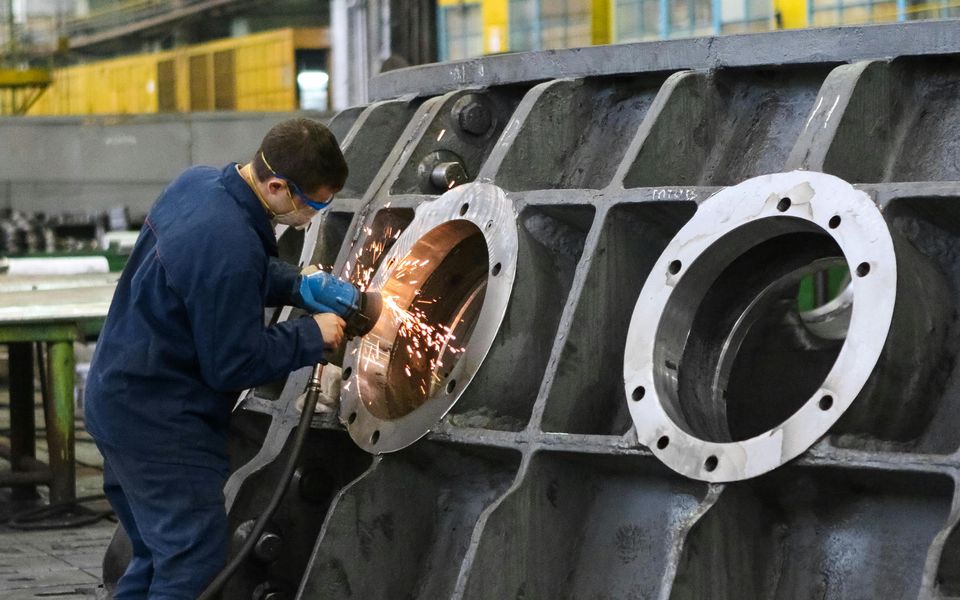
At Bim Son Cement in Vietnam, the environment is a different kind of demanding: a large industrial production site where safety alerts and operational announcements have to cut through constant machinery noise and stand up to outdoor exposure over years, not months. SH10 and SH30 speakers, both IP65-rated, went in across the plant, giving the facility reliable emergency broadcasting and day-to-day coordination on a system that runs over the existing network instead of dedicated speaker cable.

At the Iraq Beverage Factory, the starting point was a communication system that had become unreliable, frequent outages, and a public address setup that couldn't keep up with daily notifications or emergency broadcasting needs. The plant needed both stable internal communication and a unified way to reach staff across outdoor and open areas of the site. SH30 horn speakers went in across those outdoor zones, with the M100 console and the IP Audio Dispatch Console giving management the ability to trigger paging, notifications, and emergency alerts from a single point, rather than coordinating announcements manually across a site that hadn't had a reliable way to do it before.

Planning Checklist Before You Deploy
- Site size and zoning needs. Map out how many distinct areas need independent control before you spec any hardware, since this drives both speaker count and how you'll structure zones later.
- Existing network infrastructure. Confirm there's a practical path to run Ethernet or extend the network to every outdoor location, including any distances that might need a switch or extender along the way.
- Power availability at endpoints. PoE removes the need for local power at each speaker, but the switch supplying that power still needs to sit somewhere with adequate capacity for the number of endpoints on that run.
- IP rating for local climate. A coastal site with salt exposure or a region with heavy seasonal rain may push you toward reconsidering enclosure and connector specs even within the same IP65 baseline.
- Integration with security and fire systems. If emergency broadcasting needs to trigger automatically from a fire panel or camera system, that integration point should be part of the design conversation from the start, not an afterthought once the speakers are already mounted.
Conclusion
An IP outdoor PA system is as much a network design exercise as it is an acoustic one. Getting the acoustic side right, correct speaker type, height, and spacing, keeps announcements clear. Getting the network side right, PoE power, proper weatherproofing, and sensible zoning, is what keeps the system reliable and manageable for years after installation.
ZYCOO builds its outdoor speaker line, from the SH10 and SH30 horn speakers to the SL30 column speaker, to be SIP-native and PoE-powered from the ground up, so that outdoor zones can run on the same network and management platform as the rest of a site's audio system, rather than as a separate piece of infrastructure bolted on beside it.