A school rarely functions as a single building. Campuses grow. Classrooms change purpose. Outdoor areas become part of daily activity. Communication needs shift with every new term.
At the same time, expectations around school communication have changed. Daily broadcasts need to be clear and well-timed. Emergency messages must reach the right areas instantly. Administrators want more control. That's why many projects now look at an IP PA system for school environments. Instead of relying on fixed wiring and a single control point, IP PA allows communication to run over the campus network and adapts as the campus evolves.
Designing that system, however, takes more than replacing analog speakers with IP devices. It requires understanding how schools operate day to day and thinking about control, zoning, user permissions, and long-term operation.
School Communication Challenges Traditional PA Can't Address
Traditional PA systems were built around centralized hardware and fixed speaker circuits. That worked when campuses were simple. Today, it often creates limitations.
Modern schools include multiple buildings, sports facilities, cafeterias, corridors, and outdoor areas. Some messages should reach everyone, while others should stay within a specific building or zone. In analog systems, zones are tied to wiring. When a building is expanded or repurposed, modifying zones usually means dealing with physical cable paths. The system continues to operate, but it no longer mirrors how the campus actually functions.
Control creates another challenge. A single PA console in the main office assumes communication flows through one location. In reality, responsibilities are shared. Security staff, administrators, and event coordinators may all need controlled access. Without structured permission management, either access becomes restricted, or control becomes too open.
Emergency communication exposes these weaknesses further. Lockdowns and evacuations require priority override and precise zone targeting. Analog setups can support emergency broadcasts, but often rely on manual steps and fixed hardware. Monitoring is also limited. Faulty speakers or disconnected lines may not be detected until an announcement fails.
As campuses grow and schedules become more complex, fixed PA structures start to feel restrictive. That gap is what drives many school projects toward IP-based public address systems.
Key Components of a Modern IP PA System for Schools
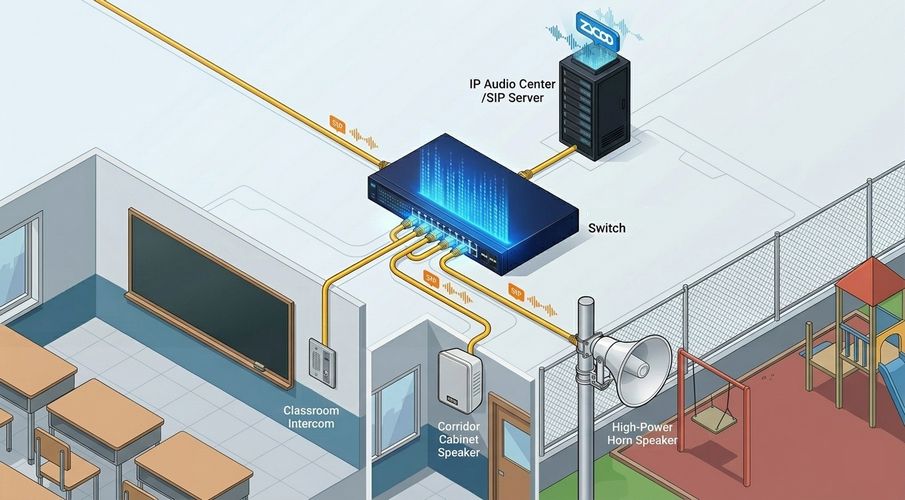
A well-designed IP PA system for school projects follows a clear structure: centralized management, shared IP infrastructure, and distributed SIP-based endpoints.
Central Control and Dispatch
At the core sits the control platform. In many deployments, this role is handled by an IP audio server combined with a dispatch interface.
For example, ZYCOO's IP Audio Server can act as the system brain, managing announcements, scheduling, priority logic, and user roles. The IP Audio Dispatch Console provides a visual interface for live paging, zone selection, and emergency trigger control. Different users can log in with defined permissions, which removes the dependency on a single physical console.
This centralized structure simplifies daily operation. Bell schedules, routine broadcasts, and event announcements can be configured in software. Emergency messages can be pre-defined and triggered instantly without searching for equipment.
Network Layer and Infrastructure
The IP network carries audio traffic alongside data and voice. In school environments, this usually means managed switches, network planning, and PoE support.
IP speakers can connect directly to the network. They receive multicast or unicast audio streams and play them locally. Powered by PoE, the installation becomes cleaner, especially in renovation projects.
Audio traffic requires stable handling. Proper network configuration ensures that announcements remain clear even during peak data usage. When planned correctly, the PA system integrates smoothly with the campus IT structure instead of operating as a separate subsystem.
Distributed IP Endpoints
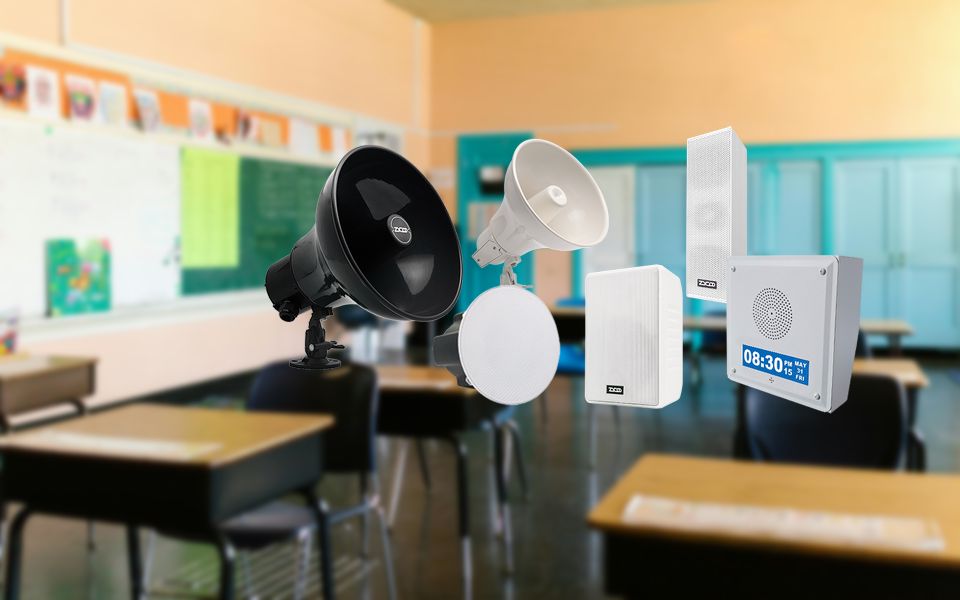
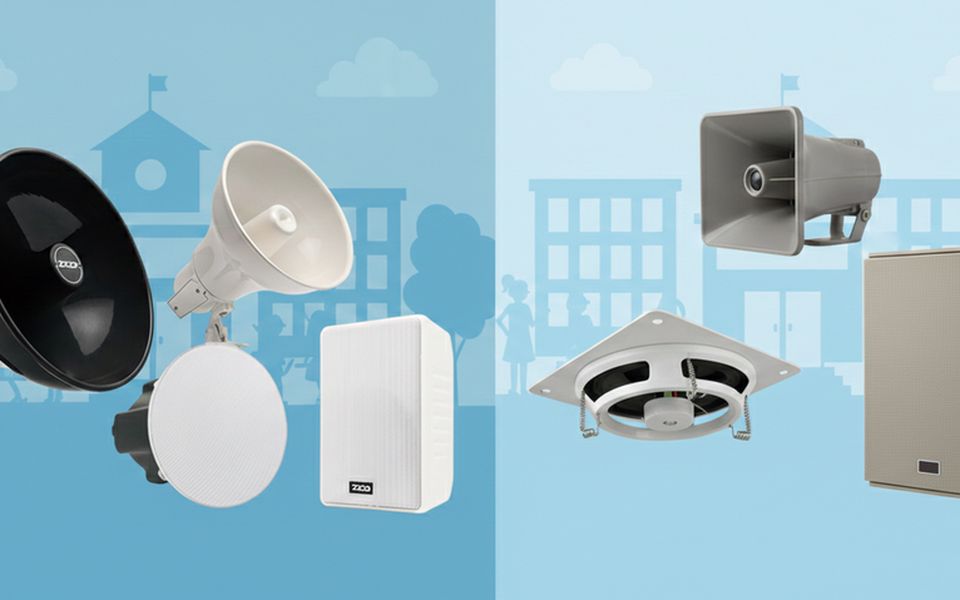
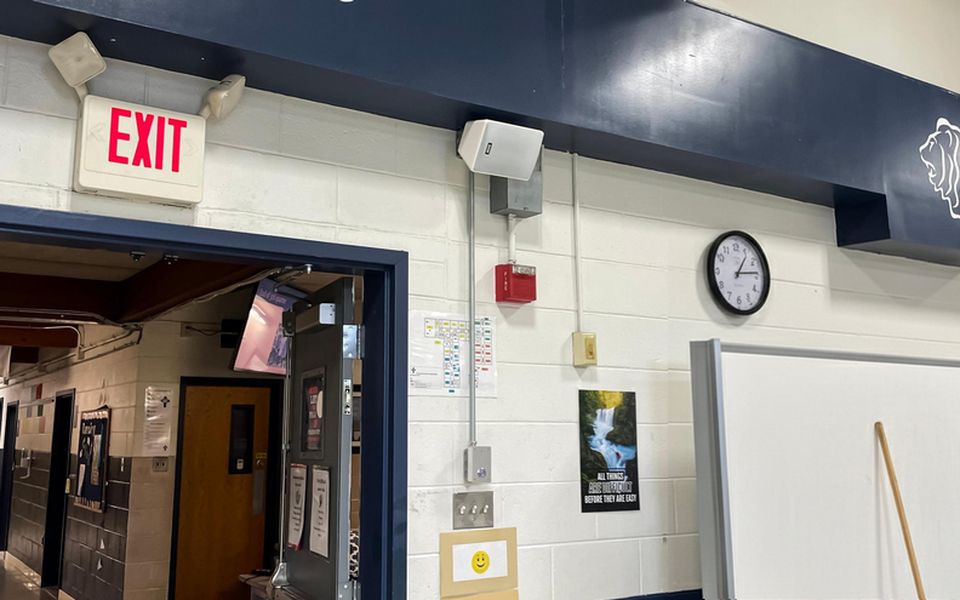
Different campus areas require different devices. For example, the ZYCOO network ceiling speaker is well-suited for classrooms and hallways for balanced coverage. Corridors may require a wider dispersion, which wall-mounted speaker can provide. Outdoor areas and sports fields need higher output and weather-resistant designs; products like ZYCOO IP horn speakers are more appropriate. Intercoms are also necessary for two-way communication.
By combining centralized control with distributed SIP endpoints, the system scales easily. Adding a new building typically means adding new devices to the network and defining zones in software. The overall architecture remains intact.
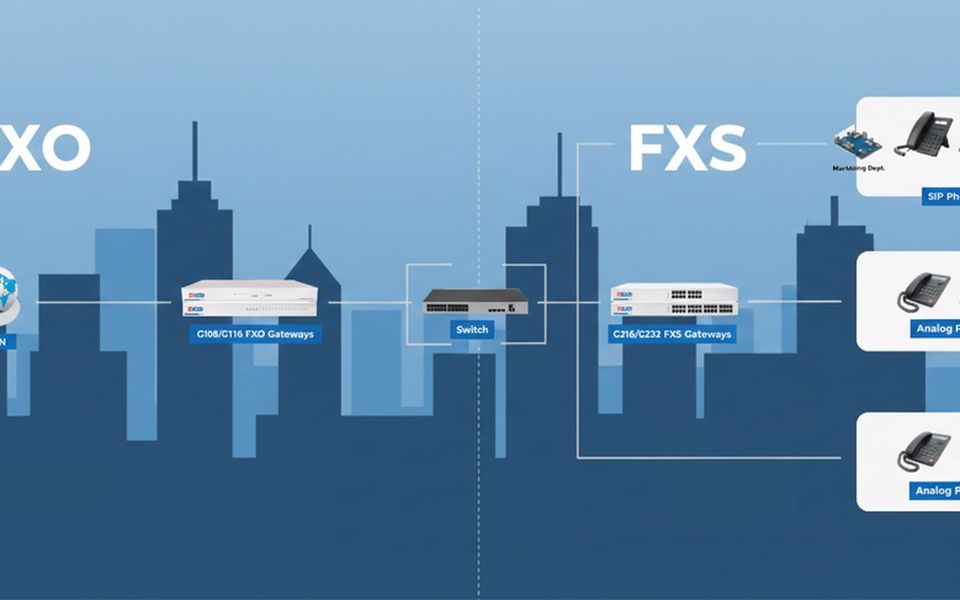
For schools with existing analog wiring, using SIP paging gateways can bridge the gap, protecting previous investments while migrating to an IP-based core.
Zone Design That Matches Campus Structure
Zone design determines how flexible the system feels in daily use.
A practical school layout usually follows three layers: campus-wide zones, building zones, and functional zones.
At the campus level, zones may cover entire sites or large outdoor areas. These zones are useful for broad announcements or emergencies that affect everyone. At the building level, zones follow physical structures such as classroom blocks, administrative buildings, or sports facilities, allowing messages to reach specific parts of the campus without disrupting others.
The functional layer adds another dimension. Not all spaces within a building serve the same purpose. Classrooms, corridors, cafeterias, and outdoor fields behave differently from an audio perspective and from an operational one. Classrooms usually require clear but controlled volume. Corridors need wider dispersion. Playgrounds and sports fields demand higher output and weather-resistant equipment.
IP PA systems allow these layers to overlap. In an IP PA system, zoning is defined in software. A classroom can belong to multiple groups at the same time. It might be part of a building zone, a grade-level zone, and an emergency group. When spaces are reassigned or expanded, changes happen through configuration instead of rewiring.
This structure allows more precise communication. Instead of interrupting the entire campus, messages can reach only the relevant audience.
Broadcasting, Paging, and Emergency Communication Requirements
In a modern school environment, daily broadcasting, paging, and emergency communication share the same infrastructure. The system has to handle them without confusion.
Daily broadcasting in an IP PA system is often scheduled in advance. Class change signals, lunch reminders, or routine messages can be automated through the central control platform. Using an IP audio server such as those in the ZYCOO portfolio, schedules can be adjusted without touching physical hardware, making it easier to align communication with changing timetables.
Paging plays a more focused role in schools. It's typically used for short, targeted announcements. Through the IP Audio Dispatch Console or compatible SIP devices, authorized staff can select specific zones and initiate announcements.
Emergency communication raises the stakes. During lockdowns, evacuations, or other critical events, messages must override routine broadcasts and reach the intended zones without delay. ZYCOO's system supports predefined emergency messages to help reduce hesitation. Authorized staff can trigger prepared alerts that are already aligned with school procedures. The priority control ensures that emergency audio takes precedence over scheduled playback or lower-level announcements.
A well-designed school IP PA system keeps these layers organized. Routine broadcasts run quietly in the background. Paging stays targeted and controlled. Emergency communication remains clear and dominant when needed.
Planning Considerations When Choosing a School IP PA System
Choosing the right IP PA system for school projects involves more than comparing speaker models.
Campus Size and Building Layout
A compact primary school with one main building requires a very different structure than a multi-building campus with sports facilities, dormitories, and outdoor zones. Building layout affects cable routes, network topology, and zone logic. Long corridors, open courtyards, and separated blocks all change how audio should be distributed. Understanding these helps you choose the right device and placement.
Sound and Communication Requirement
Classrooms need clear and controlled speech reproduction. Corridors require wider dispersion for intelligibility. Outdoor areas demand higher output and weather-resistant equipment. In many cases, speaker selection is influenced by ambient noise from HVAC systems or playgrounds. To ensure announcements are heard clearly, it is essential to evaluate the Sound Pressure Level (SPL) to ensure the system can consistently rise above the background noise without distortion. Audio clarity always matters more than raw volume.
Integration with Safety Systems
Modern schools often operate fire alarms, surveillance, and access control platforms. An IP PA system should coexist with these systems—for example, aligning emergency audio with fire triggers. Furthermore, for a truly comprehensive security mesh, the PA system should integrate with the school's IP intercom system, allowing for seamless two-way communication between classrooms and the front office, further ensuring that daily paging and emergency talkback are handled through a single, unified infrastructure.
Network Readiness
Audio streams share infrastructure with data and voice traffic, so stable infrastructure, network planning, and PoE capacity must be evaluated carefully. Real-time audio is sensitive to instability. Early coordination between IT and audio planning reduces unexpected performance issues after deployment.
Long-term Operation
Schools need visibility into device status and system health. If a speaker disconnects or a network port fails, administrators should know before it affects daily communication. Designing for maintainability—including remote device monitoring and easy software updates—protects the school's investment over the long term.
When these factors are addressed together, the resulting IP PA system becomes part of the school's operational structure rather than a standalone upgrade.
Conclusion
An IP PA system for school environments brings structure to campus communication. It connects control, network infrastructure, and distributed endpoints into a single, coordinated platform.
When designed carefully, the system adapts as buildings change, schedules shift, and campuses expand. Software-defined zoning and centralized management reduce the limitations tied to fixed wiring and isolated control panels. Over time, this flexibility becomes one of the strongest advantages of an IP-based approach in educational settings.
ZYCOO provides school IP audio solutions that support these school communication requirements, from centralized control platforms to SIP-based endpoints designed for reliable campus-wide deployment. If you're planning a new school project or upgrading an existing system, you can contact ZYCOO to discuss architecture options and technical details.