SPL is one of the parameters that occurs in almost every IP speaker datasheet. It looks simple, usually written as something like “90 dB”. But once a project moves from paper to a real site, that number suddenly feels less clear. Is 90 dB loud enough for a factory? How many speakers does it really take to cover a warehouse? Why does one speaker with a higher wattage sometimes feel quieter than expected?
In IP audio projects, SPL is not about perfect sound reproduction. It is about audibility, coverage, and reliability. It answers a practical question: Will people clearly hear the message where they are standing?
Understanding SPL helps turn a speaker datasheet into something useful. It helps estimate coverage, compare different IP speakers, and avoid under- or over-designing a paging system.
What Is SPL in IP Audio Systems?
SPL stands for Sound Pressure Level. It tells us the intensity of the sound waves, or, in simpler terms, how loud the sound seems to us. In IP audio systems, it describes how loud a speaker sounds at a given distance. SPL is usually measured at one meter in front of the speaker under standard test conditions.
In practice, SPL is not about sound quality or frequency detail. It defines usable loudness. Engineers use it as a starting point to estimate how far sound can travel and whether a speaker can rise above background noise in real environments. For example, when a datasheet shows "SPL: 92 dB", it usually means that under standard test conditions, the speaker can produce a sound pressure level of 92 decibels at one meter in front of the speaker.
That's why SPL needs to be clarified in IP speaker datasheets. It helps answer practical questions early in a project: how large an area one speaker can cover, how many speakers may be needed, and whether a model fits the acoustic conditions of the site.
Why SPL Matters in SIP Paging and IP Broadcasting
SPL and Voice Intelligibility in Paging Systems
In SIP paging, the goal is to make people understand the message the first time they hear it. If a page blends into the background or forces listeners to strain, it fails its job.
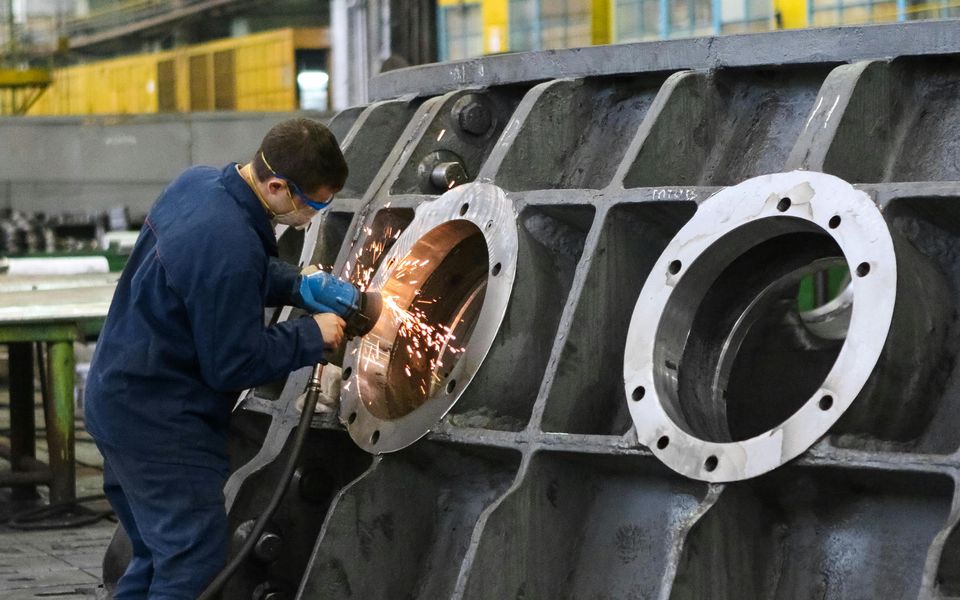
SPL sets the baseline against ambient noise. In a factory, machines can easily reach around 75–95 dB. On a school campus, hallways are quieter but still busy during class changes. If the speaker's SPL can't rise above that environment with some margin, words get lost.A properly chosen SPL helps the voice stand out without sounding harsh, making announcements stay clear, even when the space isn't quiet.
SPL and Coverage Area Planning
SPL also defines how much space one IP speaker can realistically cover. A low-SPL speaker may sound clear near the source but fade quickly as the listening distance increases. To compensate, more speakers are added to maintain consistent audibility across a zone. On the other hand, excessively high output can introduce distortion, uneven distribution, or spillover into adjacent zones.
In open-space conditions, sound pressure typically follows the inverse square law: for every doubling of distance from the speaker, the SPL drops by 6dB. For example, if a ZYCOO SH10 horn speaker provides 115 dB at 1 meter, it will theoretically provide about 103 dB at 4 meters. While reflections, installation height, and dispersion pattern influence real performance, this rule provides a practical baseline when estimating coverage.
In practice, SPL planning focuses on balancing coverage, clarity, and consistency. It helps determine speaker spacing, installation height, and zoning layout. When SPL is matched to distance and acoustic conditions, paging coverage becomes predictable and easier to control.
SPL in Emergency and Safety-Critical Broadcasting
In emergency broadcasting, SPL becomes a matter of reach, not comfort. Alerts must be heard everywhere they're meant to be heard, even when conditions are chaotic, as the background noise rises fast during emergencies.
In IP paging and emergency notification setups, like those built around ZYCOO IP Audio platforms, SPL provides the foundation for audibility. It ensures alerts can cut through noise and reach occupied areas reliably. A well-designed system favors predictable SPL levels over extreme volume. That's what makes emergency messages truly reachable.
SPL vs. Other Key Parameters in IP Audio Systems
Parameters | What it affects in IP Audio |
|---|---|
SPL (Sound Pressure Level) | Defines how loud the speaker can be at a given distance. It sets the upper limit for coverage and determines whether paging audio can rise above background noise. |
Frequency Range | Affects how natural and intelligible speech sounds. In IP audio, clarity in the voice band matters far more than extended low-frequency response. |
Sensitivity | Shows how efficiently a speaker converts electrical power into sound. Higher sensitivity often means better real-world loudness without pushing the system too hard. |
Coverage Pattern | Determines how sound spreads across a space. A well-controlled pattern helps keep volume consistent and avoids hot spots or dead zones. |
SPL is a physical parameter, but IP audio performance results from the entire signal chain working together.
How to Evaluate SPL for IP Speakers in Real Projects
Looking at SPL numbers only makes sense when they are tied to real acoustic conditions. The same speaker may sound clear in one location and barely audible in another, even if the datasheet shows identical ratings. Ambient noise, listening distance, and speaker positioning all influence how sound is actually perceived.
With typical noise ranges and SPL targets as reference points, speaker selection becomes much easier to visualize across different environments.
Environment | Typical Ambient Noise | Recommended SPL | Recommended IP Endpoints |
|---|---|---|---|
Office/Hospital Ward | 40-55 dB | 85-95 dB | |
Corridor/Supermarket | 50-70 dB | 90-100 dB | |
Factory/Loading Dock | 75-95 dB | 100-120dB | |
Outdoor Playground | 55-75 dB | 95-110 dB |
Note: In professional IP audio system design, the rule of thumb is to maintain an SPL that is 6 dB to 15 dB higher than the ambient noise to ensure speech intelligibility.
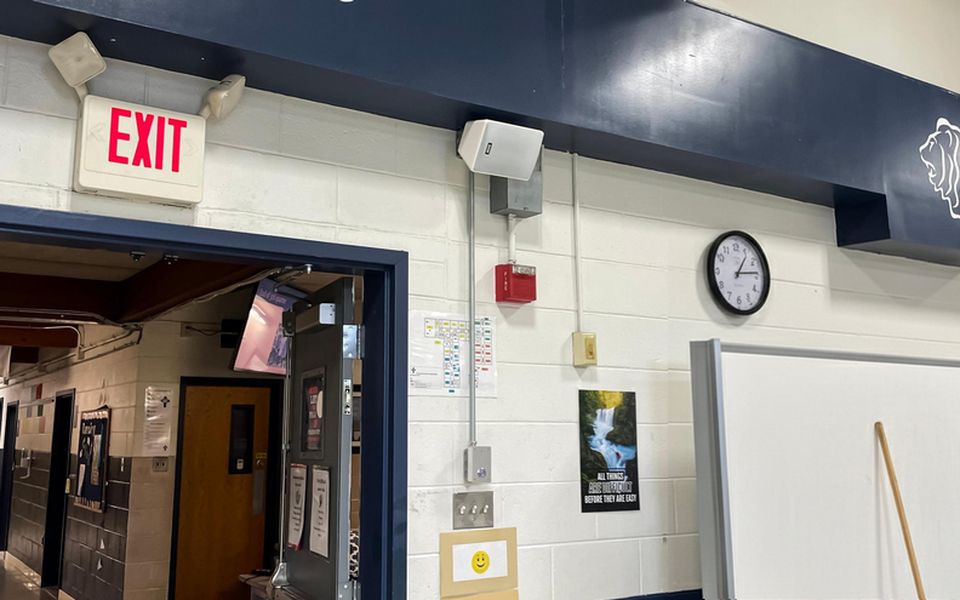
In offices, classrooms, and medical areas, background noise usually remains controlled. Paging needs to be clearly audible but comfortable for daily use. Ceiling speakers and compact wall-mounted models are commonly used because they provide even coverage without creating harsh or distracting sound levels.
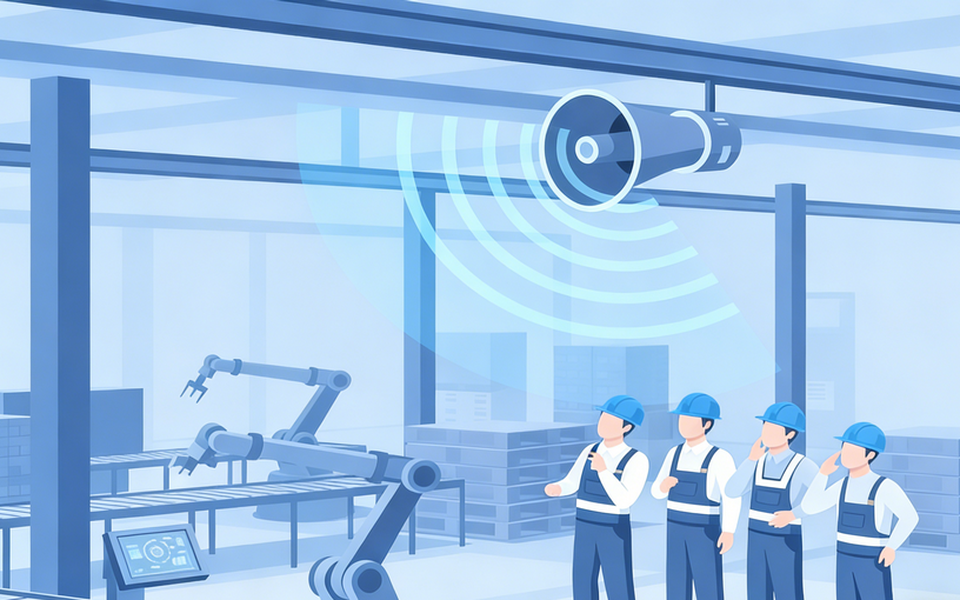
Industrial and logistics environments present a much tougher acoustic challenge. Continuous machinery noise raises the baseline significantly, which means speakers must deliver focused output rather than simply higher volume. Horn speakers are often preferred because they project sound efficiently across working zones and help maintain speech clarity in high-noise conditions.
Outdoor and campus environments add another layer of complexity. Sound dissipates quickly in open air, and coverage areas are often wide and irregular. Instead of increasing output alone, designers usually rely on directional speaker types such as column speakers or outdoor horn speakers to maintain intelligibility while limiting unnecessary sound spill into adjacent areas.
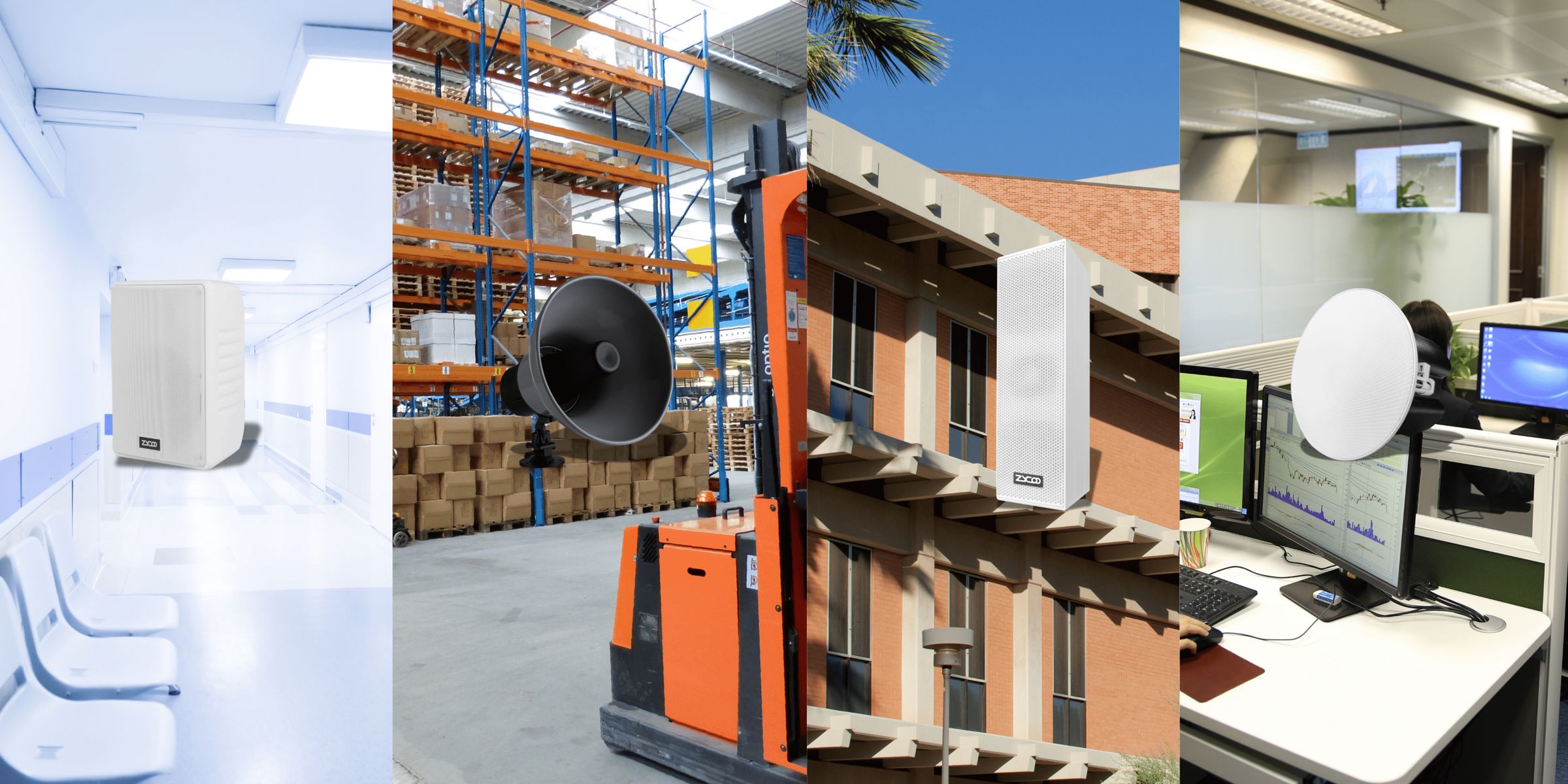
Across all of these scenarios, SPL works best as a planning reference rather than a fixed design rule. In IP audio deployments built around ZYCOO paging and control platforms, real-world performance always depends on how speaker selection, placement, and system coordination work together.
Common Misunderstandings About SPL in IP Audio
SPL Isn't Always Better When Higher
A higher SPL doesn't always mean better performance. In reality, pushing volume too far often introduces new problems. Distortion becomes more noticeable, echoes increase, and listeners get tired quickly. SIP paging systems aren't designed to shout. A good PA system always delivers messages that people can actually understand, evenly and reliably.
Don't Treat SPL as the Only Indicator
SPL is not the only thing that matters in IP audio systems. What people actually hear depends on more than physical sound pressure. Network stability, audio processing, and how paging streams are delivered all shape the final result. When those parts aren't stable, even a loud speaker can turn announcements into broken, uncomfortable noise.
Mixing Old PA Habits with SPL Thinking
In classic PA design, selection often revolves around amplifier power and raw output. When applied to SIP paging, SPL numbers can be misread or overemphasized. SPL ratings matter in a PA system, but evaluating SPL without considering coverage pattern, placement, and how audio is distributed across zones can lead to uneven results, even when the values look right.
How ZYCOO Designs IP Audio Systems with Balanced SPL Performance
In IP audio projects, SPL is never treated as a standalone target. At ZYCOO, speaker output is always considered as part of a larger SIP paging and broadcasting system, where stability and voice clarity matter more than peak numbers.
System design starts before sound reaches the speaker. Paging control, signal delivery, and timing all influence how SPL is experienced in real spaces. A balanced approach helps ensure that announcements remain clear and consistent, whether they're played through ceiling speakers in offices or horn speakers in louder environments. Rather than chasing extreme SPL values, ZYCOO's focus stays on how different speaker types, placement, and system behavior work together. The balance is what makes IP audio predictable, controllable, and suitable for daily paging and critical notifications.
Conclusion
SPL is a fundamental parameter in IP audio. It helps define loudness and coverage, and it plays a key role in speaker selection.
At the same time, SPL alone never tells the full story. In SIP paging systems, real performance comes from how speakers, network delivery, and system control work together. Understanding SPL as part of a complete IP audio system leads to clearer paging, more consistent coverage, and better results in real projects.
FAQs
Q1: Is a higher SPL always better for IP speakers?
Not always. Higher SPL can help in noisy areas, but pushing it too far may cause distortion or listener fatigue. Clear and stable speech usually matters more than maximum volume.
Q2: What is a good SPL for IP speakers in SIP paging systems?
There’s no single number that fits every project. A good SPL level depends on the environment, background noise, speaker placement, and how the paging system is designed.
Q3: How does SPL affect coverage in IP audio projects?
SPL influences how far sound can travel, but coverage also depends on speaker type, dispersion pattern, and installation height. SPL works best when evaluated together with these factors.