Public address systems are commonly found everywhere, like in train stations, airports, schools, hospitals, etc. Most of the time, they work quietly in the background. People only really notice them when something goes wrong. In large facilities, unclear announcements, delayed emergency messages, or poorly planned zoning can quickly become real operational problems.
In real-world projects, a PA (public address) system is not just an audio tool. It is part of the communication infrastructure that supports safety, efficiency, and coordination.
Today, modern PA systems are no longer isolated audio tools. They are increasingly built on IP networks and integrated with intercom, PBX, and emergency communication platforms.
This article explains what a public address system really is in modern projects, how IP-based PA changes system design, and how scalable PA system fit into real operational environments.
What Is a Public Address System?
A Public Address (PA) system is basically a one-to-many messaging system that's all about getting paging & broadcasting messages across clearly to as many people as possible at the right moment. Whether it's daily school announcements or a factory evacuation alert, a good PA system gets the right message to the right people when it counts.
In the past, this was achieved through localized, hardware-heavy setups. But nowadays, the industry is moving toward unified, network-driven architectures.
The Shift: From Traditional Analog to IP-Based PA
Switching from a traditional to an IP-based PA system is way more than just leveraging the audio quality. It changes fundamentally how paging and broadcasting are managed across an organization.
From Rigid Hardware to Software Flexibility
Old PA systems are based around a central amplifier, and all the hardware is tied up with 70V or 100V analog lines. This means that changing the broadcast to a different area always means rewiring or messing with hardware switches.
With IP-based PA systems, on the other hand, audio is treated like any other data. By converting speakers into smart SIP endpoints that can live on your existing LAN, zoning can now be configured in software. You can group up speakers or adjust the volume on the fly with just a few clicks from the web interface. And no messing about with cables either.
From Separate Bits of Kit to a Single Unified System
The really big change is integration. While a traditional PA system just sits there as a standalone bit of kit, an IP-based PA system, like the ones from ZYCOO, integrates naturally with IP-PBX platforms and security workflows.
This means that you can:
- Get messaging to work from your VoIP phone or mobile app;
- Trigger emergency alerts from sensors or your VMS system;
- Monitor system health in real-time and sort out any problems before they become a problem.
Key Components of a Modern PA System
When planning a public address system today, it helps to look at it as a networked architecture of digital building blocks. In a modern IP PA system, each block solves a specific problem: where the digital signal originates, how it is routed via the IP network, and how it finally reaches the endpoints. Once these core IP components are clear, system design becomes much more straightforward.
Audio Sources
Audio sources are devices or software that generate or trigger annoucements. In an IP-based setup, these sources are digitized for network transmission. The common types are:
- Microphones for live announcements in control rooms, security offices, or reception desks.
- Paging consoles with zone selection buttons and priority controls.
- Pre-recorded message players for routine or emergency messages.
- Software-based audio sources that allow paging from a computer or phone extension.
Control & Processing Platform
Control and processing are where modern systems stand apart. In a modern IP PA system, this is usually handled by software such as ZYCOO's IP Audio Dispatch Console rather than by fixed hardware. It decides where sound goes and when it plays:
- Zone management to divide the sites into areas such as buildings, floors, or production zones.
- Priority control so emergency messages override daily announcements or background music.
- Scheduling for automatic playback at fixed times (class breaks, shift changes, closing hours).
- User access control for different operator roles.
IP Network Infrastructure
In an IP PA system, the network replaces traditional audio cabling. A stable network is the foundation of a stable IP PA system.
- Managed network switches to prioritize audio traffic.
- PoE (Power over Ethernet) to power IP speakers and terminals, reducing electrical wiring.
- VLAN to separate PA traffic from office data for stability and security.
- Multicast streaming to reduce bandwidth usage.
IP Speakers and Audio Endpoints
IP speakers and audio endpoints are devices that actually broadcast sound to people.
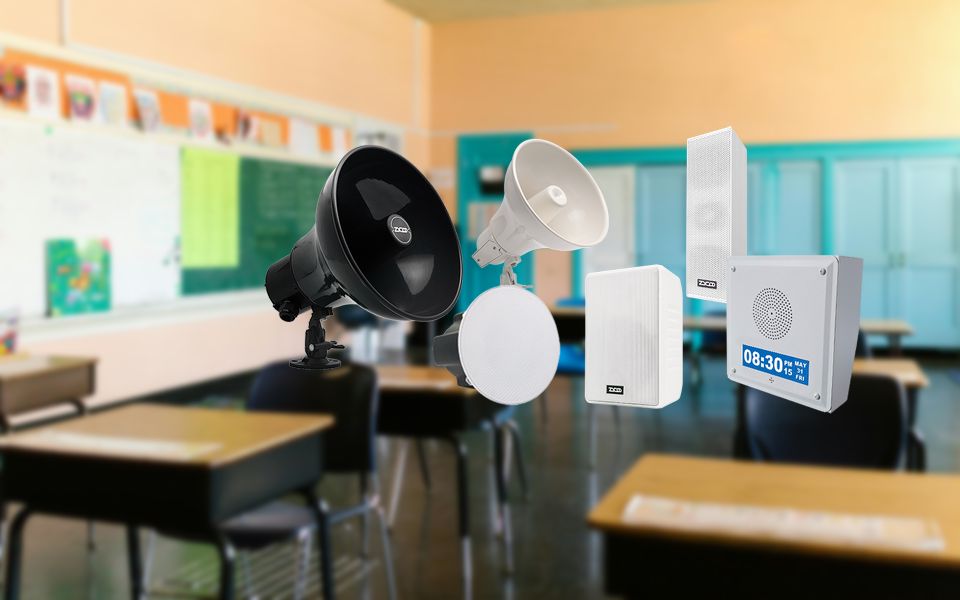
- Ceiling- or wall-mounted units for offices, schools, hospitals, and corridors.
- Horn speakers for noisy environments where higher sound pressure levels are required.
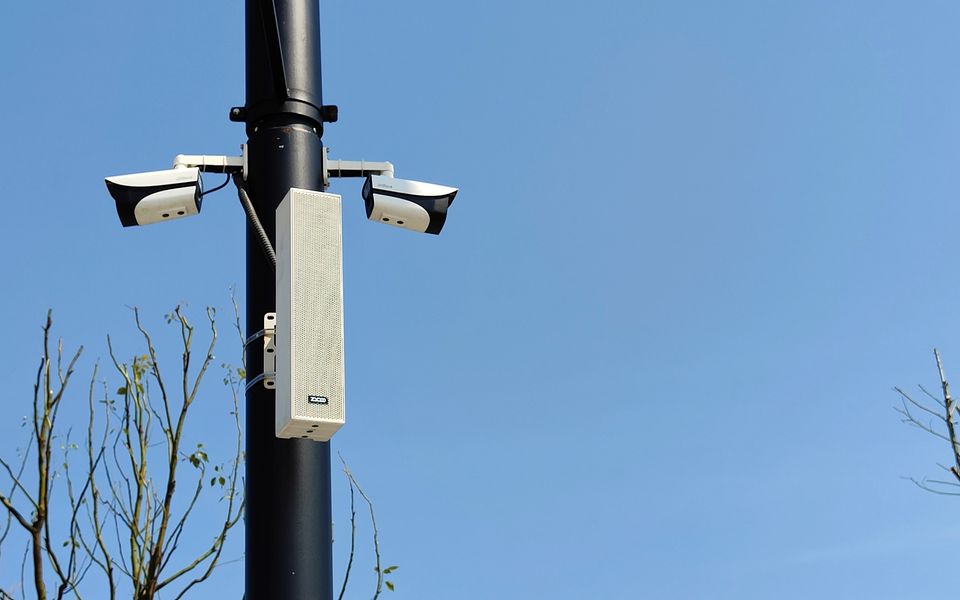
- Column speakers for large spaces such as stations and terminals, offering controlled sound dispersion.
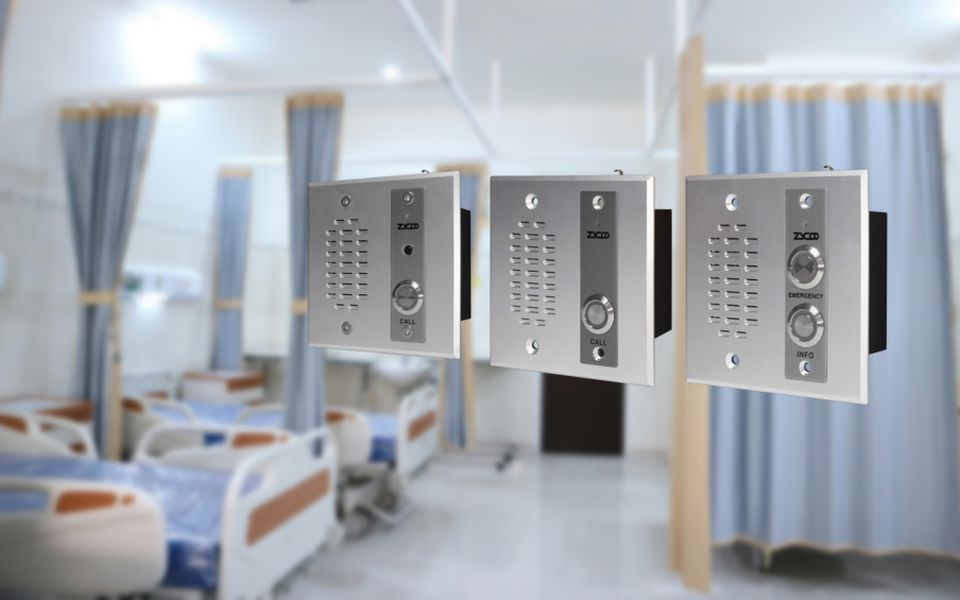
- Emergency call points (such as SOS points on a smart pole) that can trigger announcements or connect to a control room.
Monitoring, Diagnostics, and System Management
A modern PA system should be observable and manageable after installation that can reduce downtime and simplify maintenance.
Typical features include:
- Online or offline device status monitoring.
- System logs for who made announcements, when they were made, and to which zones.
- Automatic fault alerts when a device or network link fails.
- Remote configuration and firmware updates.
How PA Systems Are Used Across Industries
The real test of any public address system is how it performs in the field. Different environments place very different demands on audio communication. ZYCOO's approach is to adapt the same core platform to each use case, rather than forcing one-size-fits-all designs.
Transportation and Public Infrastructure
In transportation hubs, announcements compete with constant background noise. Platforms, concourses, tunnels, and waiting areas all require different audio characteristics. Messages must be clear, timely, and easy to understand, even during peak hours.
ZYCOO's PA system solution for transportation hubs is often deployed as part of a wider communication setup that includes intercoms and control room systems. Operators can page specific zones or the entire facility. Pre-recorded safety messages can be scheduled or triggered automatically. Because the system runs over IP, coverage can be extended as stations expand, without redesigning the core architecture.
Education and Campus Environments
Campuses are dynamic spaces. Class schedules change. Buildings are added. Communication needs shift between daily announcements and emergency alerts.
When designing a PA system for schools and campuses, ZYCOO supports both routine paging and critical notifications. The integration with SIP-based phone systems allows staff to make announcements from familiar devices. Zoned paging ensures messages reach the right areas without disrupting the entire campus. Centralized management makes it easier to maintain consistency across multiple buildings and campuses.
Healthcare and Secure Facilities
Hospitals, clinics, and secure facilities demand precision. Messages must be intelligible without causing unnecessary alarm. System reliability is non-negotiable.
ZYCOO's PA solutions for healthcare scenarios focus on controlled delivery. Announcements can be limited to specific wards or zones. Priority rules ensure emergency messages override non-critical audio. Integration with intercom systems supports coordinated responses between staff and control centers.
In secure facilities, such as correctional institutions, PA systems also play a role in operational control. Clear, controlled messaging helps maintain order while reducing reliance on manual processes.
How ZYCOO Designs PA Systems for Modern IP Projects
ZYCOO designs PA systems as part of an IP communication environment, not as isolated audio equipment. The focus is on stable operation, simple integration, and long-term usability in real projects. This makes the system easier to deploy, manage, and expand.
IP-First Architecture: The system is built on standard IP networks. Audio, control, and device management all run through the same infrastructure, which reduces cabling complexity and fits naturally into modern IT environments.
Native SIP Integration: Paging works through SIP, so it can connect directly with IP phones and PBX systems. This allows staff to use familiar devices for announcements and makes PA a natural extension of unified communication.
Centralized Control: All configuration and daily operations are handled from a central platform. Zones, priorities, schedules, and device status can be managed in one place, which simplifies both setup and maintenance.
Flexible Expansion: The system is designed to grow with the project. New zones and devices can be added without changing the original structure, making upgrades easier and more cost-effective.
Stable and Predictable Operation: The design prioritizes consistent audio delivery and clear priority handling for emergency paging. This is especially important in environments such as healthcare, transportation, and industrial sites.
Planning a PA System: Compliance, Reliability, and Emergency Requirements
Designing a Public Address system goes beyond audio quality; in professional environments, it is a critical component of the safety communication infrastructure. While a PA system often works alongside a dedicated Voice Evacuation (VA) system, ensuring it meets mission-critical standards is essential for project success.
Important points to consider:
Role in Safety Communication: Beyond background music, the system must deliver clear, intelligible instructions during emergencies. It serves as the primary bridge between security personnel and the public.
Power & Network Redundancy: To eliminate a single point of failure, critical hardware (like IP Controllers and PoE Switches) should be backed by a UPS. In an IP PA system, implementing redundant network links ensures the system remains operational even if a cable is damaged.
Compliance with Local Regulations: The boundary between general paging and certified voice evacuation varies by region. It is vital to determine early in the planning phase whether your PA system needs to interface with fire alarm panels or if it requires specific certifications (like EN54 in Europe).
System Monitoring: A reliable system should self-diagnose. Modern IP-based solutions allow for real-time monitoring of speaker lines and device connectivity, ensuring the system is "always-on" when it matters most.
Bringing It All Together
Public address systems have evolved into intelligent communication platforms. In modern environments, PA is no longer just about broadcasting sound. It’s about delivering clear, controlled messages as part of a unified communication strategy.
ZYCOO's PA solutions are built for this reality. By combining IP-based architecture, SIP integration, and practical system design, ZYCOO helps organizations communicate more effectively across complex environments.