A lockdown was initiated. The announcement played across the PA. But the front office had no way to confirm which classrooms had secured, which hadn't responded, and where exactly the situation was developing. The alert went out. The coordination didn't.
That gap between broadcasting an alert and actually managing what comes after it is the real challenge in school emergency communication. And it's a gap that most traditional systems weren't designed to close.
This guide covers the architecture of an IP-based school emergency communication system — how PA, intercom, and staff alert layers work together; what compliance frameworks now require; and the deployment decisions that determine whether the system performs when it matters most.
Why School Emergency Systems Alert But Fail to Coordinate
Traditional PA systems typically have fixed, hardware-defined activation points with a console in the main office or a microphone station at the front desk. Adding a new activation location means running new hardware. Granting a security officer temporary broadcast access requires a wiring project. When an incident happens somewhere other than where those fixed points are located, the activation chain depends entirely on someone getting to the right piece of hardware in time.
One-way audio compounds the problem. An announcement goes out, but the response team receives no feedback. They don't know if the message was heard clearly in the gymnasium or whether the classroom at the end of Building C is secured. They're operating on assumptions during the minutes that matter most.
Fragmented systems make this worse. In many schools, the PA, intercom, bell system, and staff phones all run as separate layers that don't communicate with each other. Initiating a response means touching multiple systems manually, under pressure, in sequence. Each handoff is a potential failure point.
Zone control is equally rigid Most traditional PA systems do support zone switching, but those zones are defined in hardware with fixed relay logic that determines which speaker circuits belong to which zone. Reconfiguring a zone means physical rewiring. Sending different content to two zones simultaneously often isn't possible at all.
These are coordination problems. And the architecture of the system determines whether coordination is even possible.
IP Architecture for School Emergency Communication
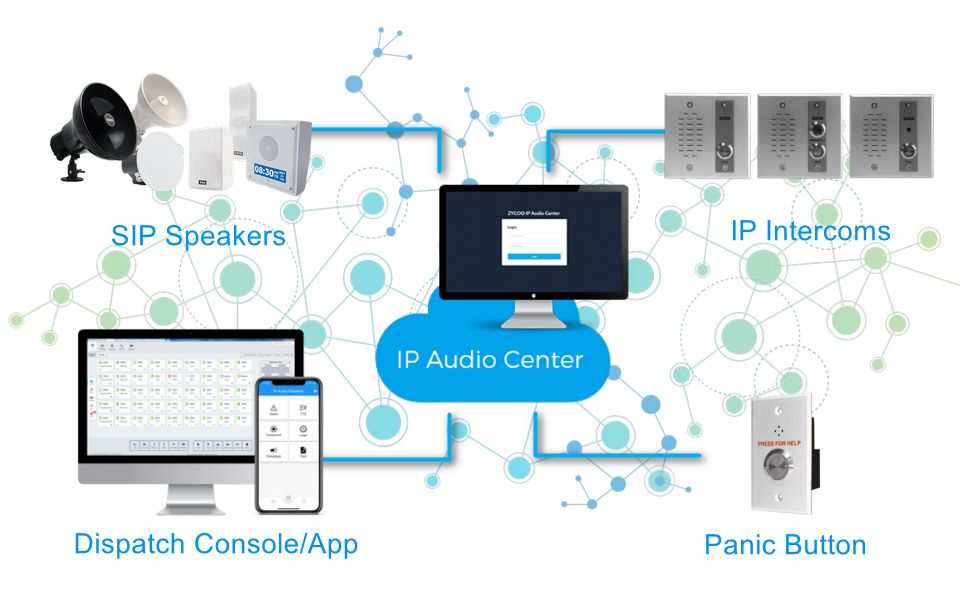
IP-based systems build emergency communication around a shared network. Every device — speakers, intercoms, panic buttons, control consoles — communicates through the same infrastructure and is managed from a single software platform. For school deployments, ZYCOO's IP Audio Center serves as the control core: zone logic, routing rules, emergency task sequences, and permission structures are all managed through one interface.
Centralized Control, Distributed Activation
In an IP-based school emergency communication system, control and activation are deliberately separated. The management platform (IP Audio Center) holds all configurations: zone assignments, priority logic, emergency task sequences, and permission tiers. Execution is distributed across authorized endpoints anywhere on the network: SIP desk phones, software client (IP Audio Dispatch Console) on staff workstations, or the applications (IP Audio Dispatch App) on mobile devices. A teacher, security officer, and administrator each operate within defined access levels; the system routes each trigger through the central platform and executes the correct task automatically.
Zone-Targeted Audio: Indoor and Outdoor
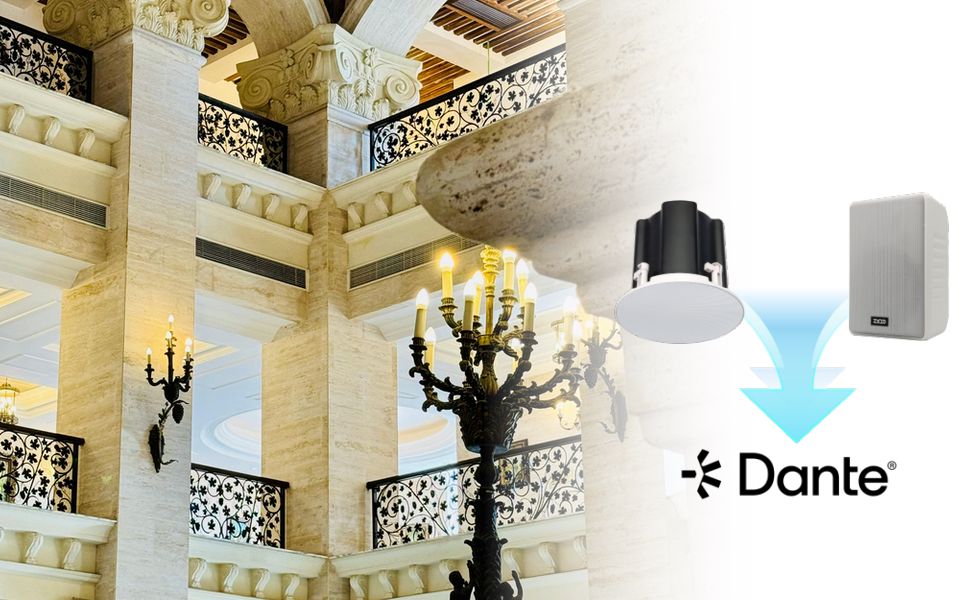
Zone paging over SIP multicast allows the system to push audio simultaneously to specific device groups — a classroom block, a gymnasium, an outdoor sports field, or all zones at once. Indoor spaces require speakers that deliver intelligible speech at moderate output levels; outdoor areas need a higher sound pressure level and weather resistance; high-noise environments benefit from visual notification as a secondary channel.
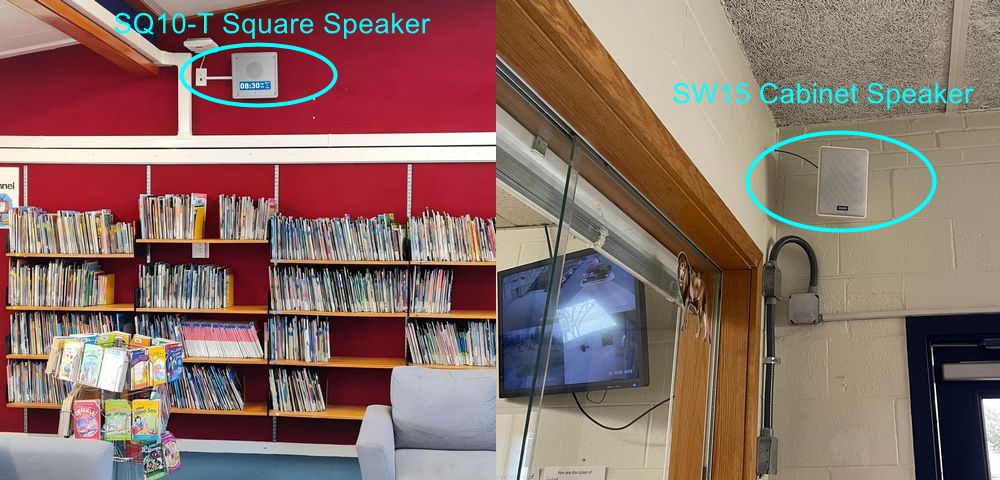
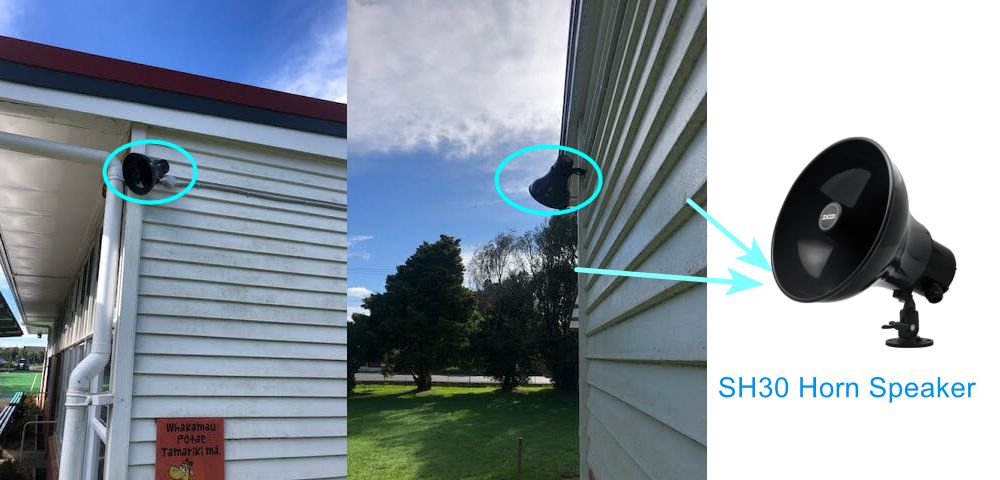
ZYCOO's SQ10 and SW15 IP cabinet speakers cover indoor zones over PoE — SQ10-T model adds an LCD screen for displaying pre-configured alert text during lockdowns. The SH30 IP horn speaker (IP65, built-in Class-D amplifier) handles outdoor coverage. A cross-link to Post 1 for zone design context: for campus-wide zone architecture and how to scope zone boundaries for daily PA use, see our IP PA System for Schools deployment guide.
Two-Way Intercom for Situational Awareness
In a well-designed school emergency communication system, the intercom layer runs alongside the PA layer so that the team managing the response can gather real-time information from specific locations while the alert is still active. IP intercoms register as SIP endpoints on the same network as the speakers and the control platform, meaning staff members can call into a specific classroom to confirm status, and a teacher can initiate a call to the office with a single button press without triggering campus-wide announcements.
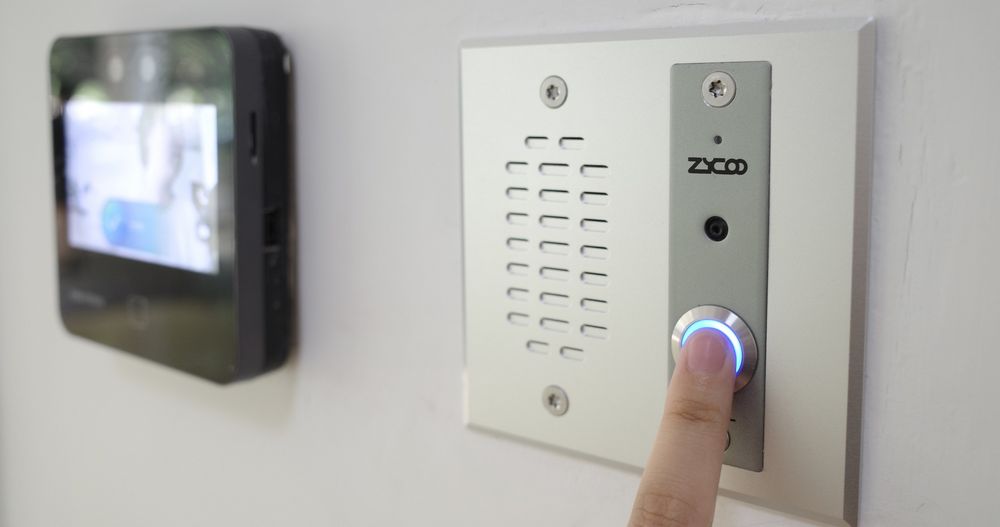
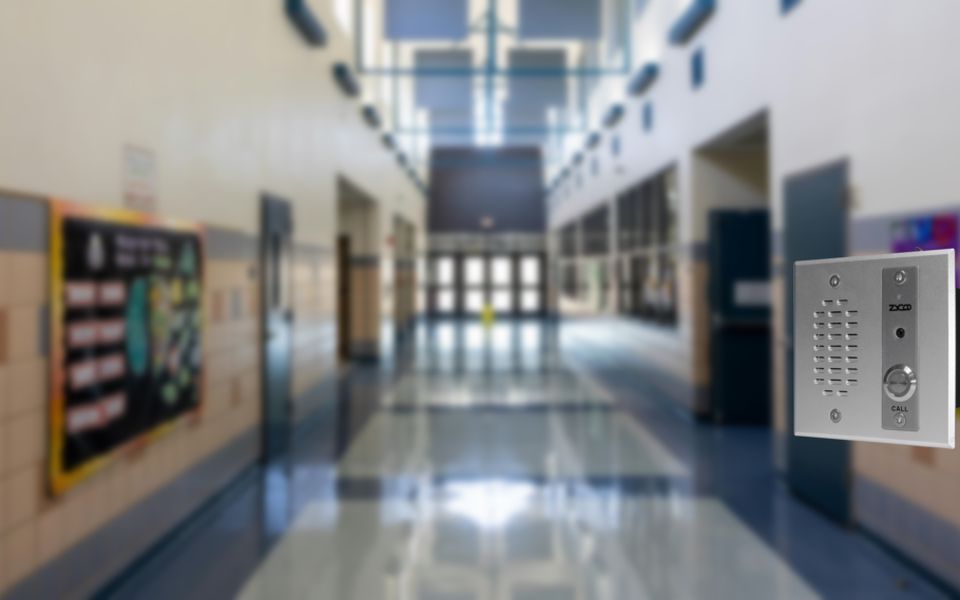
ZYCOO's VI Series network intercoms cover the primary use cases across campus. The VI-V05 video intercom suits classrooms, corridors, and main entrances with its built-in camera,allowing the control center see the room as well as communicate with it. The VI-A05 handles audio-only talkback where video isn't necessary, and the VI-D05 dual-button model suits locations that need separate call destinations for routine coordination and emergency escalation. For outdoor locations like gates,and remote building entries where weather resistance is required,all VI Series intercoms carry an IP66 rating, making them suitable for permanent outdoor installation without additional enclosures. For a full treatment of IP intercom architecture in school environments, see our IP-Based School Intercom System and Campus Safety Communication Guide.
Staff-Initiated Silent Alerts
A staff member presses the PB-S11 network panic button. It initiates a silent SIP call to up to five preset destinations, automatically polling through them if the first is busy or offline — ensuring the call connects regardless of network load at that moment.
The receiving operator confirms the situation and triggers the appropriate emergency task in IP Audio Center: a zone-specific or campus-wide lockdown, activated through the same platform without switching systems. That connected chain from individual staff alert to coordinated system-wide response is what distinguishes an integrated IP architecture from a standalone panic device wired to a single extension.
Integration With Existing Infrastructure
Most schools aren't starting from zero. IP Audio Center integrates with fire alarm systems through dry-contact inputs (PA responds automatically when the alarm trips), access control platforms (lockdown events trigger door-locking through the same signal path), and third-party mass notification platforms via standard SIP registration. For schools with functional analog speaker wiring, the X10 SIP paging gateway converts SIP audio streams from IP Audio Center to analog output, preserving that infrastructure investment while adding IP-level zone control and emergency management.
System Performance in Real Emergency Scenarios
- Lockdown. A staff member presses the PB-S11 in a corridor. The silent call reaches the main office. The safety coordinator confirms the situation and triggers the lockdown task in the IP Audio Center. A pre-recorded lockdown message broadcasts simultaneously to all indoor zones. Outdoor horn speakers receive the same announcement. While the alert is still active, the response coordinator uses a VI-V05 intercom to call specific classrooms individually—confirming which rooms have secured and which haven't responded. That room-by-room awareness is something no one-way PA system can provide.
- Weather or evacuation. A severe weather alert requires students in outdoor areas to move indoors immediately, while students in one building wing receive shelter-in-place instructions. Because the IP Audio Center manages zones independently, the dispatch console can send different pre-recorded messages to outdoor speakers and indoor zones at the same time, without a campus-wide broadcast that overrides the message specificity. First responders arriving on campus can be directed to a specific location through the same intercom infrastructure.
- Medical emergency. A teacher needs to reach the office urgently without leaving their classroom or alarming students. A single tap on the VI-A05 wall intercom initiates a direct call to the front office — no campus-wide announcement, no disruption to the class, no delay waiting for a line to open. The office can dispatch support and maintain a live audio connection with the classroom while help is on the way.
Compliance Requirements: Alyssa's Law, NFPA 72, and Global Frameworks
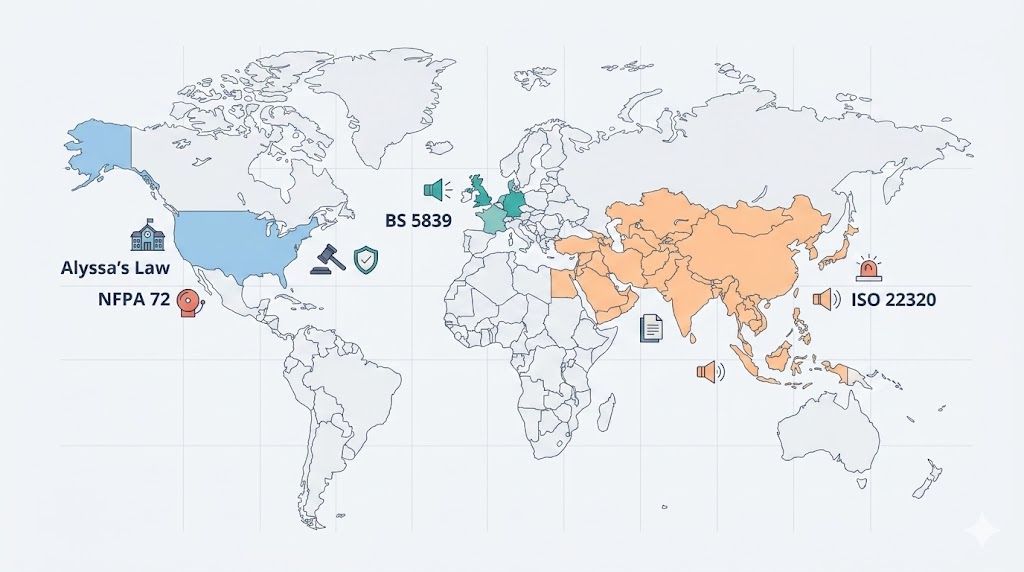
Regulatory frameworks for school emergency communication are tightening globally. While the specific legislation varies by region, the operational requirements converging on are consistent: multi-layer alerting, staff-initiated silent alerts, and communication infrastructure that supports first-responder coordination.
Alyssa's Law, NFPA 72, and the US Compliance Landscape<.h3>
In the United States, Alyssa's Law is the most specific current mandate. Enacted in ten states as of 2026, with legislation pending in eighteen more, it requires schools to have silent panic alert systems directly linked to law enforcement. Kari's Law and RAY BAUM's Act add requirements around 911 access and dispatchable location data for multi-line telephone systems—both are relevant for school VoIP environments. NFPA 72 Chapter 24 recommends using at least two of four defined notification layers: indoor audio, outdoor audio, personal alerting, and public notification.
International Frameworks: BS 5839, ISO 22320, and Regional Mandates
In the UK, BS 5839 explicitly distinguishes fire alarm sounders from lockdown sounders, meaning separate audio systems for fire and invacuation events are considered best practice, which affects how schools specify their PA and intercom infrastructure. Across the Asia-Pacific region, the Middle East, and other markets, the Ministry of Education safety frameworks and ISO 22320 emergency management principles are driving similar operational requirements, even where no specific product mandate exists yet.
An IP-based PA and intercom infrastructure is what makes compliance achievable regardless of which regulation applies. Open SIP standards mean ZYCOO endpoints can integrate with whichever mass notification or panic alert platform a district's compliance requirements specify. The infrastructure layer adapts to the compliance platform on top of it.
Five Deployment Decisions to Get Right
- Zone design before device count. Start with how the campus is used during an emergency, not how it looks on a floor plan. A zone defined by building boundaries behaves very differently during a lockdown than one defined by exit routes and response logic.
- Confirm network readiness before ordering hardware. IP audio is PoE-dependent and sensitive to multicast configuration. PoE switch capacity, VLAN separation for PA traffic, and available bandwidth should be confirmed before any device order is placed.
- Daily use determines emergency reliability. The strongest predictor of emergency reliability is how often staff use it for routine tasks. If the IP Audio Center platform manages morning announcements and bell schedules every day, staff are already familiar with how it behaves when they need it under stress.
- Treat analog infrastructure as an asset. Schools with existing analog speaker runs don't need a full replacement to gain IP emergency communication capabilities. Identify the actual bottleneck first — often it's the control layer, not the speakers — before assuming a greenfield design is required.
- Define activation permissions before installation. Multi-point activation is only an advantage when the scope is clear. Permissions that are too restrictive slow responses; permissions that are too broad create accidental activations. Configure this in software before devices go on walls.
Conclusion: A System That Works on the Worst Day
The most reliable school emergency communication systems are ones that staff use every day. Morning announcements, bell schedules, classroom-to-office calls, visitor check-in at the front door. When the same IP infrastructure handles all of these, the emergency response layer isn't a separate system staff have to remember how to operate under pressure. It's an extension of the workflow they already know.
ZYCOO's IP-based approach — with IP Audio Center as the control core, SIP speakers and intercoms as the endpoints, and the PB-S11 panic button as the staff activation layer — is designed around that principle. The architecture supports both daily operations and emergency response without parallel systems or separate training requirements.
For schools and districts evaluating a campus safety communication upgrade, contact ZYCOO to discuss zone architecture, infrastructure assessment, and deployment planning for your specific campus.